In Nigeria’s central Benue State, often called the country’s “food basket,” lawmakers have begun debating legislation that could shape how the state responds to rising climate pressures that are already disrupting farming, intensifying conflict over land, and displacing thousands of rural residents.
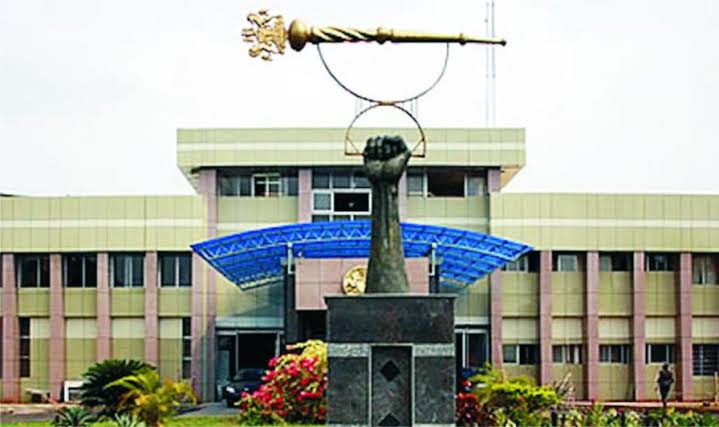
On February 23, 2026, the Benue State House of Assembly convened a public hearing on the proposed Benue State Climate Change Bill, 2026, inviting farmers, experts, development partners, and civil society groups to examine a draft law intended to establish a formal framework for climate governance.
The hearing, held at the Assembly Complex in Makurdi, reflects growing recognition among policymakers that climate risks are no longer distant projections but daily realities affecting agriculture, livelihoods, and security in the Central Nigeria.
Declaring the session open, Speaker Alfred Emberga, represented by the Majority Leader of the House, Thomas Dugeri, said the state was already experiencing the consequences of climate variability.
“As Speaker of the House, I understand the gravity of the climate crisis,” Emberga said during the hearing. “Its effects are already being felt across Benue State, from unpredictable weather patterns to challenges in our agricultural practices.”
He described the proposed legislation as a strategic step to protect the state’s ecological systems and agricultural economy.
“This bill is not just a piece of legislation; it is a vital step towards securing a resilient and sustainable future for all of us,” Emberga added.
A Legislative Response to a Changing Climate
The proposed law seeks to establish a comprehensive climate governance framework for Benue State, aligning local policy with Nigeria’s broader climate commitments under international agreements.
According to the explanatory memorandum accompanying the bill, the legislation would create a Benue State Council on Climate Change Secretariat, introduce a system of carbon budgeting, and integrate climate considerations into economic planning across government agencies and the private sector.
The memorandum states that the law is intended to “provide a framework for mainstreaming climate change actions, establish a system of carbon budgeting, and provide for the creation of the Benue State Council on Climate Change Secretariat.”
If enacted, the law would apply to all ministries, departments, and agencies of the Benue State government, as well as private entities operating within the state.
It would also set long term targets to achieve net zero greenhouse gas emissions between 2050 and 2070, aligning with Nigeria’s national climate commitments.
Officials say the framework aims to coordinate mitigation and adaptation programs, mobilize financial resources for climate action, and strengthen resilience across sectors ranging from agriculture to infrastructure.
The public hearing, lawmakers said, was designed to allow citizens and experts to contribute directly to shaping the law.
“We encourage open and honest dialogue,” Emberga told participants. “Whether you are a farmer, a business owner, a community leader, or simply a concerned citizen, your contributions are essential to crafting a bill that is both effective and inclusive.”
Climate Pressures in Nigeria’s Agricultural Heartland
The urgency of the legislation reflects mounting climate stresses across Benue State, where agriculture forms the backbone of the economy.
Benue produces large quantities of staple crops including yams, rice, sesame, cassava, and soybeans, supplying food markets across Nigeria. But shifting rainfall patterns, floods, soil degradation, and rising temperatures are increasingly affecting agricultural productivity.
Speaking during a climate governance training session for members of the Benue Assembly in December 2025, Governor Hyacinth Alia warned that climate impacts were already threatening the state’s economic stability.
“Benue, Nigeria’s food basket, remains highly vulnerable to climate pressures,” the governor said, according to a report published by The Nation. “Recurring floods in Makurdi, Agatu, Guma, and Logo, rising temperatures, declining soil fertility, and shrinking agricultural productivity are clear signals that urgent action is needed.”
He added that climate stress is also intensifying security challenges in rural communities.
“These pressures are worsening security challenges as drought induced migration deepens farmer herder tensions,” Alia said.
Across the Nigeria Central region, climate related disruptions to land and water resources have contributed to disputes between farming communities and nomadic cattle herders.
International organizations have warned that these pressures are likely to intensify as climate variability reshapes traditional land use patterns.
Climate Change, Conflict and Displacement
Research by the United Nations Refugee Agency (UNHCR) indicates that climate change is already fueling displacement and social tensions in Nigeria’s Middle Belt, including Benue State.
In a report examining the intersection of climate change and conflict, the agency noted that changing rainfall patterns and desertification in northern Nigeria have pushed herding communities southward in search of grazing land.
This migration has increased competition for farmland and water resources in the central region.
“Climate change has reduced the availability of natural resources in Nigeria, aggravating clashes between communities in Benue State and displacing some half a million people,” UNHCR reported in 2024.
The consequences of that displacement are visible in camps scattered around Makurdi and neighboring communities.
At the Ichwa camp for internally displaced people, nearly 4,000 residents live in makeshift shelters after fleeing violent attacks on their villages.
Many of them were farmers before conflict forced them to abandon their land.
One of those residents, Mimi Kiva, told UNHCR she lost her husband and daughter during an attack on her community in Guma Local Government Area.
“I lost everything,” she said in an interview with the agency. “If you go to my village, everything has been burned down. I cannot farm any longer.”
Kiva now volunteers as a teaching assistant in a small school inside the camp, where she helps children displaced by the violence.
Across the camp, residents face harsh living conditions and limited economic opportunities. Some attempt to rent nearby farmland, but climate variability makes harvests increasingly unpredictable.
Vincent Ijebe, another displaced farmer, borrowed money to cultivate rice on land near the Benue River. Just weeks before harvest, heavy rainfall combined with the release of water from a dam in Cameroon caused the river to flood his fields.
“We planned to repay the debt after harvesting the rice,” Ijebe told UNHCR. “But the flood destroyed almost everything.”
Stories like these illustrate how climate shocks can compound existing vulnerabilities, particularly for communities already affected by conflict.
According to the United Nations Office for the Coordination of Humanitarian Affairs, millions of people worldwide now face overlapping risks from climate disasters, displacement, and economic instability.
Nearly half of the world’s forcibly displaced population lives in countries exposed to severe climate hazards.
Building a Governance Framework
Against this backdrop, policymakers in Benue are attempting to strengthen the institutional architecture needed to address climate risks.
David Mailumo, Director General of the Benue State Council on Climate Change, said the proposed law aims to create a coordinated system for climate action within the state.
According to Mailumo, the legislation would enable government agencies to implement mitigation and adaptation strategies more effectively while integrating climate policies into development planning.
“The bill provides for the formulation and implementation of long term climate mitigation and adaptation programmes,” he said during the public hearing.
It would also facilitate the mobilization of climate finance and establish mechanisms to track emissions reductions through carbon budgeting.
Mailumo noted that Nigeria faces a significant climate finance gap that limits the scale of interventions needed to address environmental challenges.
“Government budget allocations for environmental and climate related programs remain limited, often fluctuating and insufficient to meet the scale of interventions required,” he said during the legislative training session cited by The Nation.
The proposed law seeks to close some of those gaps by creating a legal framework that could attract international climate funding and strengthen accountability mechanisms.
The Role of Policy in Climate Adaptation
Experts say that state level legislation can play a critical role in translating national climate commitments into practical actions that affect communities.
Nigeria’s Climate Change Act, enacted in 2021, established a national council responsible for coordinating climate policy and introduced mechanisms such as carbon budgeting at the federal level.
However, implementation often depends on state governments adopting complementary policies and integrating climate considerations into development planning.
In Benue, where agriculture accounts for a large share of employment, adaptation strategies may include climate smart farming techniques, improved water management systems, and investments in flood control infrastructure.
Governor Alia has already highlighted several initiatives underway in the state, including the development of a State Climate Change Policy and Action Plan, the deployment of solar powered street lighting, and support programs for climate resilient agriculture.
Civil society organizations and international development partners are also working with state institutions to strengthen climate governance and build technical capacity.
During the legislative training organized with International Alert and supported by Irish Aid, stakeholders discussed strategies for improving oversight, enhancing climate risk assessments, and integrating environmental considerations into budgeting processes.
International Alert’s Nigeria Country Director Dr. Kingsley Udo described the collaboration as an opportunity to bridge policy and implementation gaps.
“Today’s meeting is therefore timely and strategic,” Udo said during the event. “We are collectively taking an important step toward building a coordinated, accountable, and sustainable climate governance framework for Benue State.”
Looking Ahead
The proposed climate law remains under legislative consideration, and lawmakers say the public consultation process will help refine its provisions before it is brought to a vote.
For policymakers in Benue, the legislation represents an effort to address multiple intersecting challenges, including environmental degradation, agricultural vulnerability, and resource related conflict.
As climate impacts intensify across Nigeria’s Middle Belt, state level governance structures may increasingly shape how communities adapt to changing environmental conditions.
The outcome of the legislative process could determine how Benue mobilizes resources, coordinates climate action across agencies, and integrates climate resilience into its long term development planning.
For a state whose economy and identity are closely tied to agriculture, the stakes extend beyond environmental policy. They reach into questions of food security, livelihoods, and the stability of communities that depend on the land.