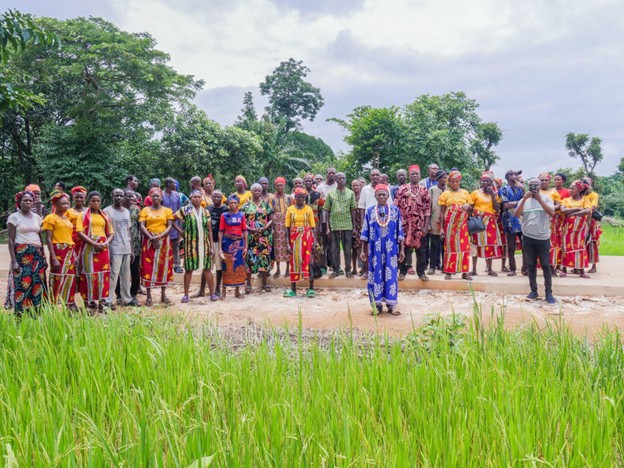
In the rolling green stretch of Egbu Forest near Okposi in Ebonyi State, southeastern Nigeria, the traditional ruler, Eze Onyibe Agwu, pauses beside a towering iroko tree. His voice carries quiet reverence. “These trees have stood for over 500 years. They are part of our history, our identity. To lose them is to lose ourselves.” For generations, the people of Okposi protected their forest through customs and taboos, treating certain trees as sacred. In recent decades, that spiritual protection has weakened. Bush burning, illegal logging, and land clearing have steadily eaten into what once seemed endless green.
The turning point came in 2024 when the New Neighbourhood Environment Watch Foundation (NEW-F) began sensitising rural communities under the Green Livelihoods Alliance (GLA) – Forests for a Just Future Programme, supported by the Women Environmental Programme (WEP). Through town hall meetings, field demonstrations, and storytelling sessions, villagers began linking forest health with human survival. “People started to understand that losing trees meant losing clean air, fertile soil, and rain,” recalls Kelechi Okezie, executive director of NEW-F. “We made it clear that cultural protection alone was no longer enough. It had to become law.”
By late 2025, the response was taking shape in local ordinances. In Okposi, the traditional council passed a bye-law fining offenders ₦20,000 for cutting any protected tree, with harsher sanctions for repeat violations. In neighbouring Ohatekwe-Edda, Ezeogo Nwankwegu decreed that no one may fell a tree without planting another to replace it. Three offenders have already been sanctioned. These measures may appear small, but they mark a quiet revolution: local leadership taking concrete legal steps against deforestation. Officials at the Ebonyi State Ministry of Environment have confirmed plans to integrate the community bye-laws into formal state policy.
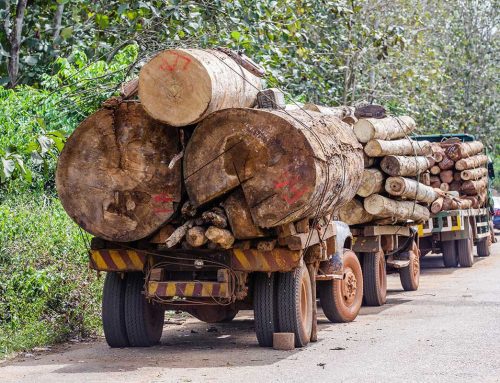
Forests matter because they knit together the climate, biodiversity, and livelihoods. They act as natural carbon sinks, absorbing the heat-trapping gases that drive global warming. When they fall, the carbon stored in trunks and roots is released back into the air, compounding the crisis. Nigeria has paid heavily for its neglect. Since 2000, the country has lost about 1.33 million hectares of tree cover, emitting roughly 724 million tonnes of CO₂ in the process, according to satellite data. The Food and Agriculture Organization estimates that over 80 per cent of Nigeria’s original forest cover has vanished, while independent analyses show the country is losing close to 400,000 hectares annually to farming, logging, and urbanisation. More than 90 per cent of Nigeria’s original forest cover has been depleted.
Ebonyi’s case fits within this national picture. The state’s forest reserves cover about 1,479 hectares, yet less than 650 hectares remain forested. Between 2001 and 2020, Ebonyi lost roughly 1,947 hectares of tree cover—about 13 per cent of its original forests. The drivers are familiar: small-scale farming, wood fuel collection, timber trade, and weak regulation. Yet the response emerging from communities like Okposi and Ohatekwe-Edda shows a different path. “Before, people thought cutting trees was just normal,” says Eze Agwu. “Now they know it destroys our land, brings floods, and drives away animals. These new rules are saving our forest and our children’s future.” From his palace, he points to a new plantation where his wife has planted two thousand palm trees as part of a community restoration effort.
The ecological benefits of such efforts ripple outward. Forests regulate rainfall, hold the soil in place, and sustain biodiversity. They shelter medicinal plants, pollinators, and wildlife that form the backbone of rural life. In Ebonyi, environmental advocates have noted that once-common indigenous species like the akparata tree are disappearing. Reforestation drives by NEW-F have planted more than 500 seedlings in Ogada-Edda and Ohatekwe-Edda to reintroduce native species and curb soil erosion. “The communities themselves donated the land,” explains Okezie. “It shows how local ownership can make environmental restoration real.”
National experts agree that forest loss in Nigeria is both an environmental and economic crisis. Over 90 per cent of the country’s population relies on wood for cooking, a demand that feeds the chain of illegal logging and bush burning. Expanding farms for cassava, yam, and rice continues to push the forest frontier deeper into fragile zones. Urbanisation and infrastructure projects clear what remains. “The forest is being squeezed from every direction,” says Dr Ameachi Joshua Nwinyimagu of the Department of Climate Change, Ebonyi State Ministry of Environment. “We are working to support traditional institutions and integrate their bye-laws into our legal system, so local action can have state backing.”
Despite progress, challenges remain. Accurate data on forest cover and biodiversity loss are scarce, making it difficult to track change or measure impact. Enforcement of bye-laws depends on traditional councils’ capacity to monitor offenders, while powerful interests in the timber trade often operate beyond their reach. Reforestation projects face high seedling mortality rates due to drought and grazing. And though the federal government’s National Environmental (Forest Sector) Regulations of 2014 require replacement planting and restrict tree felling without permits, implementation is weak in many states. “Community-driven enforcement may be our best hope for now,” notes an officer in the Ebonyi Ministry of Environment.
Still, the cultural and environmental shift underway in Ebonyi carries quiet significance. It reclaims the authority of tradition for a modern cause. By linking ancestral respect for sacred groves with climate science, communities are redefining what conservation means in practical terms. In the process, they are rewriting a story of loss into one of renewal. When people plant trees not just as ritual, but as law, they lay the foundation for resilience.
Across Nigeria, the implications reach further than one forest. Protecting community forests strengthens local adaptation to climate shocks. It prevents floods, stabilises rainfall, and keeps rural economies afloat. Every hectare saved preserves carbon sinks critical for global mitigation efforts. Forests are not only the lungs of the earth but the backbone of rural survival.
Eze Agwu’s words capture that sense of inheritance: “We are doing this for the children. They will remember that their fathers kept something alive.” His sentiment mirrors a broader truth emerging from Ebonyi’s green revival—climate action is not only the work of scientists and policymakers; it is also the work of custodians who remember what once stood and refuse to watch it vanish.
In a country losing 400,000 hectares of forest each year, the resolve of small communities like Okposi and Ohatekwe-Edda offers a different measure of strength. Their trees may not cover the largest area in Nigeria, but their determination stands tall enough to be seen from anywhere that forests still fall. The lesson is simple yet profound: when people guard their land as fiercely as their legacy, the climate has a fighting chance.