Nigeria is losing its forests at a pace that scientists and conservation groups describe as among the fastest in the world, with consequences now spilling into climate stability, rural livelihoods and national security.
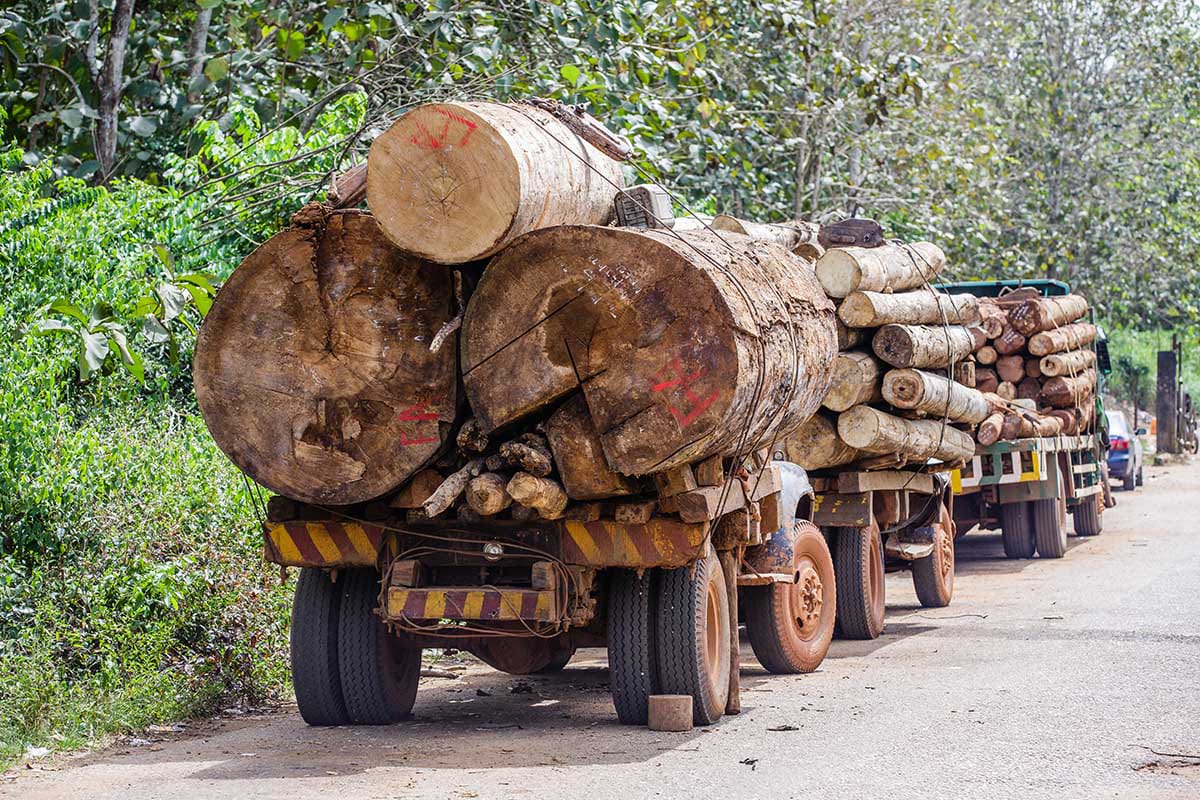
The Nigerian Conservation Foundation (NCF) says the country loses about 400,000 hectares of forest each year to illegal logging, agricultural expansion and urban growth. Over the past three decades, nearly 90 percent of Nigeria’s original forest cover has been wiped out, leaving less than 10 percent intact.
“Forests are essential for life on Earth. They produce oxygen, absorb carbon dioxide, host biodiversity, regulate water cycles, protect soil, and provide resources for millions of people,” said Joseph Onoja, director-general of NCF, in a statement marking the International Day of Forests. “Yet, we continue to destroy them indiscriminately. Immediate action is needed to stop this environmental disaster.”
Data from Global Forest Watch, a platform developed by the World Resources Institute in partnership with the University of Maryland, supports the scale of the loss. Using satellite-based monitoring of tree cover change, the platform shows that between 2001 and 2024, Nigeria lost about 1.4 million hectares of tree cover, with roughly 250,000 hectares of natural forest disappearing in 2024 alone. The underlying data, produced by researchers at the University of Maryland’s Global Land Analysis and Discovery (GLAD) lab, is widely used to track deforestation trends in near real time and has become a benchmark for assessing forest loss globally.
A System Under Strain
The drivers of deforestation are well established but remain largely unresolved. Illegal logging, often tied to domestic demand for timber and charcoal as well as export markets, continues alongside rapid population growth, weak enforcement and corruption within forest governance systems.
Research published in the African Journal of Criminology and Justice Studies shows how these pressures intersect with economic hardship. In forest communities across Ondo and Edo states, unemployment and poverty have pushed many young people into illegal logging networks.
“Since I discovered that I could make some good money from locating timbers and other hard and rare species of woods… there has been no need for me to look for another job,” one respondent in Edo State said, describing how informal logging has become a survival strategy.
The study, conducted by researchers from Adekunle Ajasin University, the University of Ibadan and Ambrose Alli University, draws on field interviews with loggers, traders and forest guards. It finds that illegal logging operates through complex networks involving local actors, middlemen and foreign buyers, often beyond the reach of formal regulation.
Respondents described how foreign demand, particularly from Asian and Middle Eastern markets, drives extraction. “Specific woods that are difficult to come by… are often in high demand by foreigners who export them,” a community leader in Ondo State said.
The Global Forest Coalition has raised similar concerns in Cross River State, where tensions escalated in Ekuri Forest after community members attempted to halt logging operations, they say lacked proper consent and environmental safeguards. The group warned that law enforcement actions against local defenders’ risk undermining community-led conservation.
“The Ekuri people are not criminals; they are custodians of one of Nigeria’s most important remaining forests,” said Diel Mochire, the coalition’s regional focal point for Africa.
Environmental Decline and Climate Pressure
The loss of forests is already reshaping Nigeria’s ecological systems. Satellite observations from the University of Maryland indicate that much of the recent loss is concentrated in areas of high ecological value, including primary and older secondary forests, which are critical for carbon storage and biodiversity.
Experts link deforestation to worsening floods in the south and advancing desertification in the north, as vegetation loss disrupts water cycles and soil stability.
Forests that once regulated river flows and groundwater levels are disappearing, contributing to sedimentation in major dams and increasing runoff in urban areas. For agriculture, the effects are direct: declining soil fertility, erratic rainfall and rising temperatures are reducing productivity.
In northern states such as Borno, Yobe and Katsina, desertification is shrinking arable land, intensifying food insecurity and deepening rural poverty. These pressures are also feeding into migration and conflict.
The NCF warns that millions of Nigerians who depend on forests for fuel, food and income face growing uncertainty as resources decline. Rural economies built around non-timber forest products such as shea, honey and medicinal plants are weakening.
Crime, Conflict and Governance Gaps
Illegal logging has evolved beyond small-scale activity into a structured system involving multiple actors. Academic research points to the role of syndicates, including foreign buyers and local intermediaries, as well as alleged complicity by some officials.
“Individuals and logging companies… bribe officials, or neglect legal obligations to local communities,” the study notes, citing OECD findings on environmental crime.
In some areas, enforcement efforts are constrained by limited resources. Forest guards interviewed in the study described inadequate equipment and rising risks, including armed confrontations with criminal groups.
“We are just like boys scout… our guns are less sophisticated,” one forest guard said, pointing to the imbalance between enforcement capacity and the scale of illegal operations.
The consequences extend beyond environmental damage. As forest resources shrink, competition over land and livelihoods has intensified, contributing to inter-communal tensions and herder-farmer conflicts. The same dynamics have been linked to youth recruitment into criminal networks and armed groups.
Policy Signals and Missed Opportunities
There are signs of policy response, though implementation remains uneven. In Kano State, authorities have begun reviewing a forestry law dating back to 1959 in an effort to strengthen environmental protection and align with current realities. The state has also introduced penalties for unlicensed tree felling and chainsaw use.
At the national level, conservation groups are calling for stronger enforcement of environmental laws, better funding for forest management and greater private sector investment in sustainable practices.
The NCF’s Green Recovery Nigeria Programme aims to restore forest cover to 25 percent by 2047, though experts say such targets will require sustained political commitment and coordination across federal and state governments.
A System at a Tipping Point
The convergence of environmental degradation, economic pressure and weak governance has placed Nigeria’s forests under severe strain. What was once a largely ecological issue now intersecting with climate risk, economic stability and security.
Global assessments based on datasets from the University of Maryland and partners show that deforestation in tropical regions remains a major source of greenhouse gas emissions, underscoring the role of forest loss in accelerating climate change. In Nigeria, the erosion of forest carbon sinks adds to existing vulnerabilities in a country already exposed to extreme weather and energy shocks.
The evidence from conservation groups, satellite data platforms and academic research points in the same direction: without coordinated intervention, forest loss will continue to accelerate, with cascading effects across sectors.
For policymakers, the challenge is no longer limited to conservation. It now sits at the intersection of climate policy, economic planning and national security, requiring responses that address both the immediate drivers of deforestation and the broader systems that sustain it.