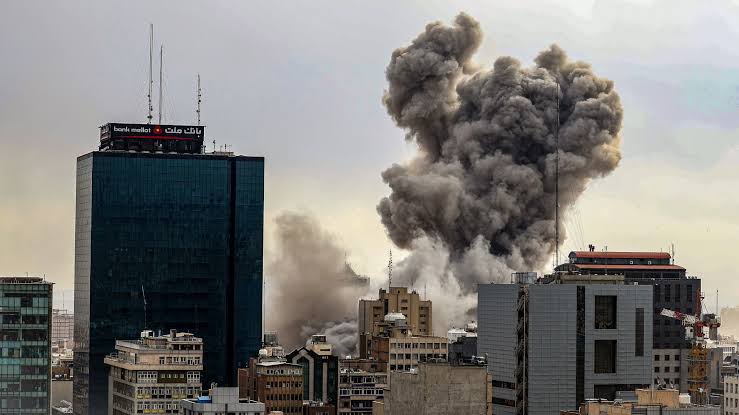
The US-Israel military campaign in Iran has released more than 5 million tonnes of carbon dioxide in just 14 days, an amount exceeding the annual emissions of Iceland and equivalent to the total annual emissions of the 84 lowest-emitting countries combined, according to an analysis by the Climate and Community Institute (CCI).
As airstrikes, drone attacks, and missile barrages destroy infrastructure across Iran and southern Lebanon, the immediate human toll is compounded by environmental damage that threatens global climate stability. Patrick Bigger, research director at CCI, said, “Every missile strike is another downpayment on a hotter, more unstable planet, and none of it makes anyone safer.”
Carbon Cost Breakdown
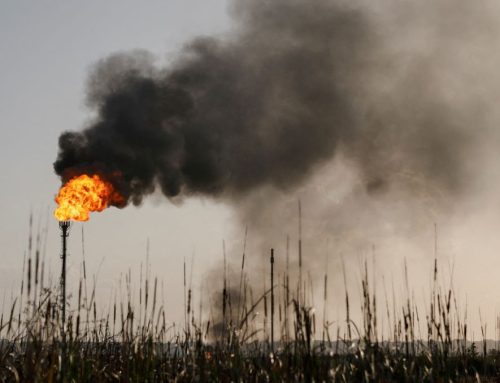
The analysis, conducted by CCI researchers Patrick Bigger, Benjamin Neimark, and Fred Otu-Larbi, estimates that the destruction of roughly 20,000 civilian buildings, fuel depots, and military hardware accounted for the majority of emissions, totaling 2.4 million tonnes of CO₂. Fuel burned in combat, including aviation fuel for heavy bombers, support vessels, and vehicles, added 529,000 tonnes, while attacks on storage facilities, which ignited 2.5–5.9 million barrels of oil, contributed 1.88 million tonnes. Missiles, drones, and destroyed military equipment accounted for the remainder of emissions.
Fred Otu-Larbi, lead author of the study, warned, “We expect emissions to increase rapidly as the conflict proceeds, mainly due to the speed at which oil facilities are being targeted at an alarming rate.”
Global Energy Implications
The conflict has disrupted global oil and gas flows. Iran’s shutdown of traffic through the Strait of Hormuz, responsible for 20% of global oil and 19% of liquefied natural gas supply, has triggered price surges worldwide, including in Nigeria. Reuters reports that fuel prices in Nigeria have risen cumulatively by 47% over six weeks, exacerbating pre-existing energy shortages and inflationary pressures. Daily life and business operations across the country are already affected.
“The revision reflects the surge in global crude oil prices,” said a market source cited by Arise News. Meanwhile, Dangote Refinery, one of the world’s largest, increased petrol prices from ₦1,075 to ₦1,175 per litre, illustrating the direct economic impact of Middle East instability on Nigeria’s energy sector.
Long-Term Climate and Energy Risks
Beyond immediate emissions, CCI highlights that post-conflict reconstruction and expanded fossil fuel production could lock in carbon-intensive infrastructure for decades. “Burning up the annual emissions of Iceland in two weeks is something we really cannot afford,” Fred Otu-Larbi said. Patrick Bigger added that historical patterns show US-driven energy shocks often lead to increased drilling, new LNG terminals, and further fossil fuel dependence.
This chain of events has implications for Nigeria, a country already facing significant energy poverty and climate vulnerability. With a weak grid, frequent blackouts, and reliance on imported petroleum products, Nigeria is exposed to volatile international energy markets. The CCI analysis underscores the interconnection between global conflicts and national energy security.
Policy Considerations
Climate experts warn that the emissions released in the first two weeks of the conflict are only a fraction of the long-term climate cost. Patrick Bigger of the Climate and Community Institute said the pattern is clear. “Every refinery fire and tanker strike is a reminder that fossil-fuelled geopolitics is incompatible with a livable planet.” The Institute’s analysis also notes that reconstruction, expanded oil production, and continued military activity could multiply emissions over time, locking in carbon-intensive systems for decades. Fred Otu-Larbi cautioned that “we expect emissions to increase rapidly as the conflict proceeds,” particularly as oil infrastructure continues to be targeted.
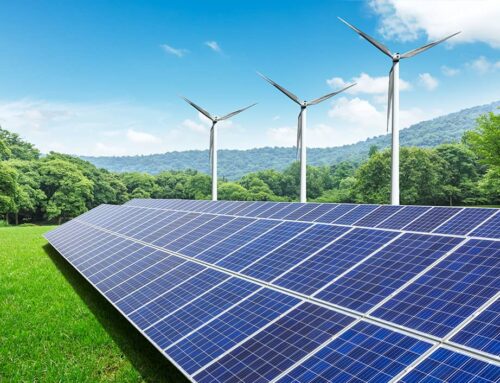
For Nigeria, where rising global oil prices are already driving fuel costs and deepening energy strain, these warnings point to a need for stronger domestic buffers against external shocks. Experts have consistently identified investment in renewable energy, improved grid reliability, and reduced dependence on imported fuel as critical steps. Strengthening climate data systems and ensuring timely public access to energy and weather information can also support planning across sectors. As global conflicts reshape both emissions and energy markets, aligning energy policy with climate resilience remains central to limiting long-term economic and environmental risk.