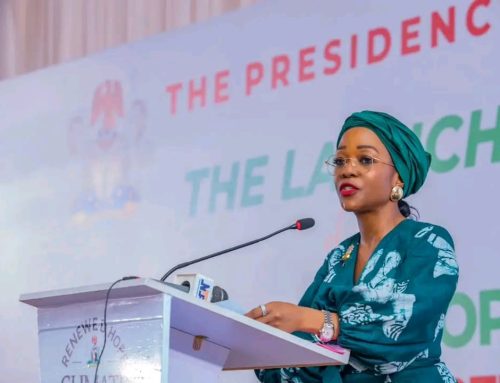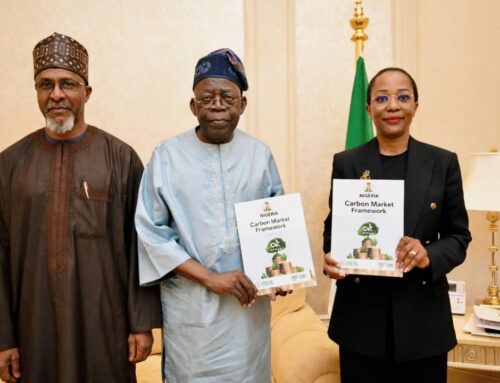
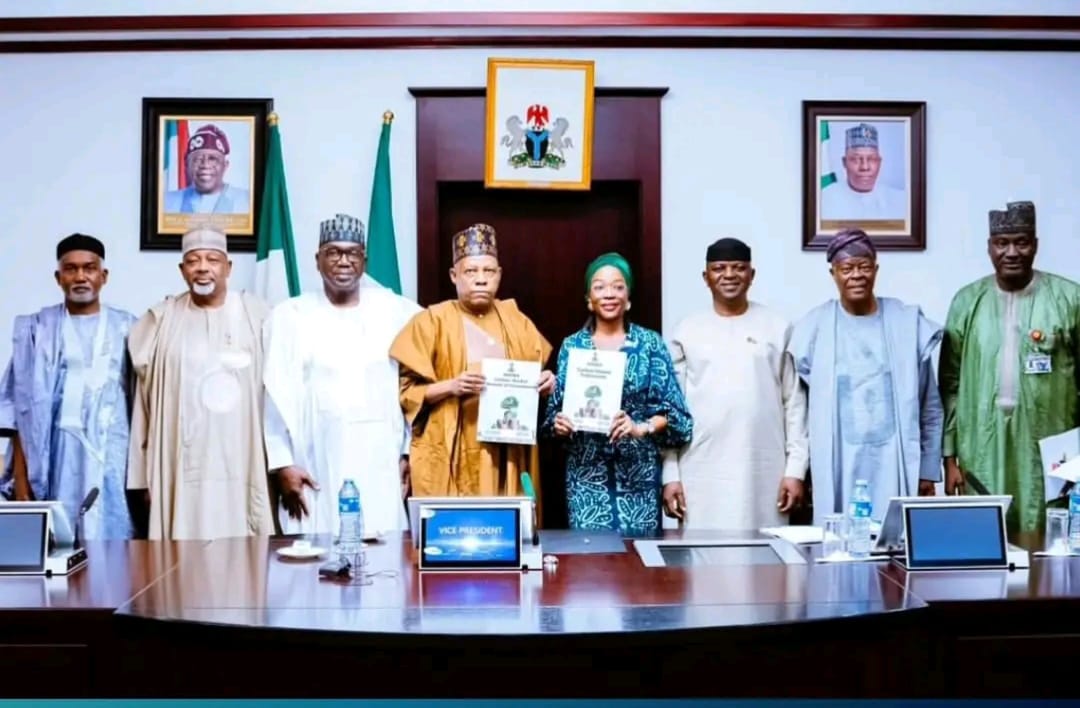
As the world turns its eyes to COP 30 in Belém, Brazil, from November 10 to 21, 2025, Nigeria has taken a bold step in its climate agenda. The Federal Government has approved the adoption of a National Carbon Market Framework (NCMF), the operationalisation of a Climate Change Fund, and the restoration of the National Council on Climate Change (NCCC) to the national budget line.
According to Stanley Nkwocha, Senior Special Assistant to the President on Media and Communications (Office of the Vice President), the goal is to establish and manage Nigeria’s participation in carbon markets to unlock between US$2.5 billion and US$3 billion annually in carbon finance over the next decade. This move positions Nigeria to benefit from global climate finance flows while advancing domestic emission-reduction goals.
President Bola Tinubu, represented by Vice President Kashim Shettima at the council meeting, described the approvals as part of wider efforts to properly position Nigeria within the global carbon market. He stated that “addressing climate change is not just an environmental imperative but an opportunity to unlock new investments, jobs, and innovations across the nation’s energy, agriculture, and industrial sectors.”
Behind this announcement lies a more complex terrain of readiness, regulation, and the test of whether vulnerable Nigerians can truly benefit from the promises of carbon finance.
Building the Framework
The Climate Change Act 2021 laid the foundation for Nigeria’s climate governance. It established the NCCC and the Climate Change Fund and mandated the government to set five-year carbon budgets and annual targets. However, implementation has been slow. Stakeholders have long observed that the absence of a regulatory framework for carbon credit issuance, verification, and trading stalled progress.
The newly approved National Carbon Market Framework seeks to fill this gap by defining the rules, institutions, and procedures for generating, validating, and trading carbon credits within the country and with international partners. It creates a structure for Nigeria to participate credibly in the global carbon market while ensuring accountability at home.
According to the NCCC Director-General, Omotenioye Majekodunmi, the council’s decisions are timely and will influence how Nigeria is perceived globally. “The deliberations and decisions of the council will determine how effectively the country can mobilise support to achieve its climate goals,” she said.
The operationalisation of the Climate Change Fund also signals readiness for immediate mobilisation of resources. This fund is expected to channel investments into adaptation and mitigation projects, helping Nigeria transition from mere policy talk to tangible implementation.
The restoration of the NCCC budget line gives the council institutional stability. It ensures the secretariat can coordinate national efforts across ministries and sectors, rather than depend on irregular project-based funding.
Market Potential
Nigeria’s carbon market potential has been discussed for years. Researchers at the University of Nigeria, Nsukka, estimated in early 2025 that the country could generate over US$2 billion by 2030 through its carbon market activation programme. The new target of up to US$3 billion annually over the next decade marks a sharp escalation of ambition.
Globally, the voluntary carbon market has suffered a crisis of confidence, with the value of carbon offsets falling from US$1.9 billion in 2022 to US$723 million in 2023 after questions were raised about credibility and verification. For Nigeria, therefore, the challenge is not just to create a market but to build one that is transparent and trustworthy.
The NCMF’s credibility will rest on robust Measurement, Reporting and Verification (MRV) systems, reliable registries, and clear benefit-sharing mechanisms. Without these, the promise of billions in annual revenue may remain theoretical.
Nigeria currently hosts over 100 carbon projects, mainly in clean cookstoves, energy efficiency, and afforestation. Twenty-one developers are active in the country, ranking Nigeria among Africa’s most promising markets for carbon credit generation. However, issues such as land-rights conflicts, limited awareness, and weak institutional capacity persist.
The government’s target suggests an intention to expand across multiple sectors—energy, agriculture, industry, and forestry—while aligning with international mechanisms like Article 6 of the Paris Agreement that govern cross-border carbon trading.
Economic Openings
For the Federal Government, carbon finance is not only a climate tool but an economic strategy. If the country succeeds in mobilising up to US$3 billion annually, the inflow could reshape sectors such as renewable energy, sustainable agriculture, waste management, and forest conservation.
The NCCC Secretariat noted that Nigeria is now eligible to access new rounds of climate finance from multilateral funds. The Minister of Finance and Coordinating Minister of the Economy, Wale Edun, who supported the recommendations, promised that the ministry would coordinate a quarterly Climate Finance Tracking Dashboard to ensure accountability and transparency in fund utilisation.
By institutionalising climate finance, the government hopes to create jobs, stimulate local manufacturing, and attract investors to green projects. The administration’s message, as Tinubu stated, is clear: “Nigeria stands ready to take its rightful place as a global leader in climate action, ensuring that our voice and our reality are heard and respected in international negotiations.”
This reframing—from climate risk to climate opportunity—marks a policy evolution. But its true impact will depend on how deeply the benefits reach the people most affected by the changing climate.
Human Impact
The carbon market, if implemented equitably, holds promise for vulnerable Nigerians. Communities involved in agro-forestry, sustainable land management, or renewable-energy projects could earn income through carbon credits while gaining resilience against droughts and floods.
Projects like clean cookstove distribution can reduce deforestation and indoor air pollution while improving health outcomes for women and children. In forest regions, community-managed conservation projects can generate carbon credits that provide alternative livelihoods. A Niger Delta study estimated that such initiatives could generate US$320 million annually for local populations if structured transparently.
However, risks remain. Poorly designed carbon projects can lead to exclusion or displacement, especially in areas with unclear land tenure. Environmental groups have warned that without strong safeguards, communities may lose control of their land to investors. Nigeria must therefore prioritise free, prior, and informed consent processes for affected groups.
Another concern is that carbon finance often favours mitigation—reducing emissions—while most vulnerable Nigerians need adaptation support to survive floods, droughts, and extreme weather. Balancing the two will determine whether the NCMF truly serves national development or mainly satisfies international carbon accounting.
Integrity and Inclusion
Integrity is the central test for Nigeria’s carbon market. Global experience shows that weak verification undermines both investor confidence and climate impact. The NCMF’s design must therefore include transparent MRV systems, independent auditing, and a public carbon registry to prevent double-counting.
Benefit-sharing frameworks are equally vital. Revenues from carbon credits should not accrue only to corporations or project developers. Local communities must see direct gains—through infrastructure, education, health facilities, and fair compensation for ecosystem services.
Public awareness is another weak link. Research shows that knowledge of carbon markets remains low among rural Nigerians, who are often the custodians of forests and agricultural lands. Capacity-building programmes are needed to help them engage with and benefit from carbon-credit projects.
Furthermore, the Climate Change Fund’s operations should be guided by transparency laws. Regular publication of inflows and disbursements would strengthen public trust and prevent mismanagement.
The coming months will reveal whether these systems are established before the market begins trading credits. Without them, Nigeria risks repeating the global pattern of opaque carbon schemes that enrich few and fail to reduce emissions.
Connecting the Dots
Nigeria Climate Watch’s earlier feature on the Vice President’s climate agenda emphasised the government’s intention to mainstream green finance and attract global partnerships. The new approvals transform that narrative from ambition to execution.
The NCMF now provides the mechanism through which the administration’s climate promises can be realised. It gives journalists, researchers, and civil society a benchmark to monitor: from policy statements to real-world results. The next phase will test implementation—how projects are selected, who participates, and what benefits reach grassroots communities.
This connection also strengthens Nigeria’s presence ahead of COP 30, where climate-finance access and carbon markets will dominate global negotiations. By arriving with an approved framework and an operational fund, Nigeria positions itself as a proactive player rather than a passive recipient.
Looking Ahead
Several questions now stand before policymakers and citizens alike. When will the implementing regulations be published? Which sectors will pioneer the first projects? How will the government ensure that revenue flows are transparent and benefits reach the poor?
Observers will also track how much funding is allocated to adaptation relative to mitigation. Flood-prone communities in Benue, Bayelsa, and Lagos will judge climate progress not by market figures but by whether new investments reduce their vulnerability.
As the Finance Ministry prepares its Climate Finance Dashboard, expectations for accountability will rise. The success of the framework depends on cooperation across ministries, technical competence within the NCCC, and genuine inclusion of communities.
For Nigeria, this is more than a fiscal opportunity. It is a test of governance—whether a developing nation can turn climate policy into both economic growth and social protection.
The coming years will determine whether the promise to unlock US$3 billion annually becomes a cornerstone of Nigeria’s green transition or just another unfulfilled climate ambition.
For now, the country has moved one step closer to transforming its environmental challenges into economic possibilities—if it can bridge the distance between markets and the people they are meant to serve.