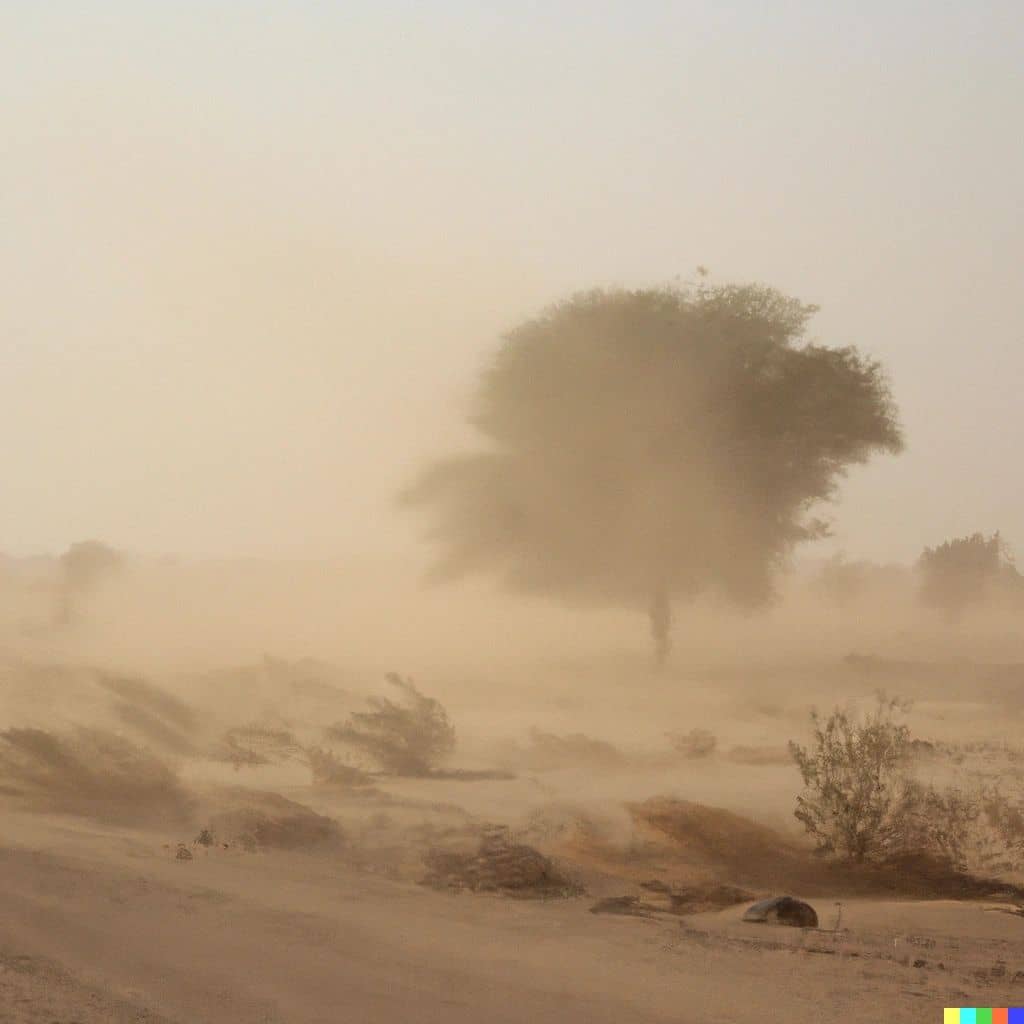
For generations, harmattan has marked the rhythm of the dry season across Nigeria and much of West Africa. Between late November and March, northeasterly trade winds blow from the Sahara Desert, carrying dry, dust-laden air southwards across the region. The season is typically defined by sharply reduced humidity, hazy skies, cool mornings, cracked lips and ashy skin, particularly in December and January. In northern Nigeria, night-time temperatures can fall below 10°C, while the Jos Plateau often records morning temperatures between 12°C and 15°C, creating some of the coldest conditions in the country.
But in the closing weeks of 2025 and the opening days of 2026, that familiar seasonal pattern faltered. Across southern Nigeria, and in several parts of the Middle Belt, residents waited for harmattan that did not arrive. Instead of dry winds and dust, many communities experienced heat, humidity, and unseasonal rainfall. In Rivers State and parts of the South-South and South-East, rain fell repeatedly between December 24 and December 29, followed by a heavy downpour on January 1, 2026. Social media filled with questions that reflected a broader unease. Where did the harmattan go? And what does its apparent absence say about the state of Nigeria’s climate.
Understanding Harmattan and Its Climatic Role
Harmattan is a regional atmospheric phenomenon driven by pressure differences between the Sahara and the Gulf of Guinea. During the Northern Hemisphere winter, high-pressure systems form over the Sahara, pushing dry air southwards. As this air mass travels, it picks up fine dust particles, which reduce visibility and suppress cloud formation. The result is a dry season that has historically provided a climatic pause between the heavy rains of the monsoon and the onset of the next planting cycle.
According to the Nigerian Meteorological Agency, harmattan plays a stabilising role in West Africa’s seasonal climate system. Reduced humidity limits rainfall, lowers the risk of flooding, and allows farmers to harvest crops such as yam, maize, and sorghum. The season also supports specific agricultural systems, particularly in cooler highland areas.
On the Jos Plateau, for instance, harmattan brings genuinely cold conditions by Nigerian standards. The combination of altitude, low humidity, and cooler air allows Plateau State to support crops rarely grown elsewhere in the country. Irish potatoes thrive in these conditions, making the state Nigeria’s largest producer. Temperate vegetables, strawberries, and even grapes are cultivated commercially, shaping a distinct agricultural economy that depends on predictable cool-season conditions.
What Changed in the 2025–2026 Season
NiMet’s Seasonal Climate Prediction for 2025 indicated that early 2026 would be warmer than the long-term average across much of Nigeria. While the agency projected higher temperatures, it did not explicitly forecast widespread December rainfall in southern Nigeria. Yet lived experience across multiple states suggested a deviation from historical norms.
Instead of the dry, dusty air typically associated with harmattan, residents reported persistent humidity and above-average heat. In coastal cities, daytime temperatures felt unusually high for late December, while nights offered little of the customary relief. The absence of dust haze, often visible even from satellite imagery during strong harmattan episodes, was also widely noted.
Climatologists caution against drawing conclusions from a single season. However, the 2025–2026 harmattan fits into a broader pattern of weakening and shortening observed over several decades. A 2023 NiMet assessment reported a gradual decline in harmattan intensity and duration over the past 30 years, alongside a steady rise in average temperatures across Nigeria.
Global Warming and Shifting Atmospheric Patterns
Scientists point to global warming as a primary driver of these changes. Rising concentrations of greenhouse gases have altered large-scale atmospheric circulation, including the strength and timing of trade winds. As temperatures increase globally, pressure gradients that drive seasonal winds weaken, reducing the force with which Saharan air masses move southward.
This weakening is not unique to Nigeria. Across West Africa, researchers have documented changes in the West African monsoon system, increased variability in rainfall onset and cessation, and more frequent extreme weather events. These shifts affect how and when harmattan manifests.
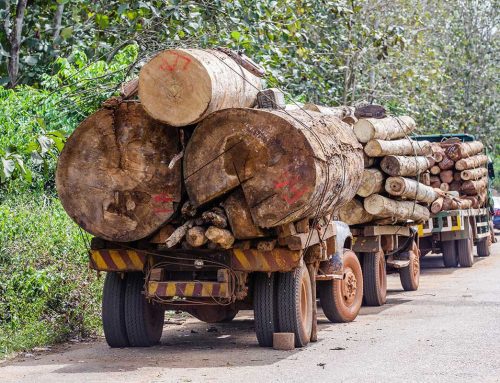
Human-induced land-use changes further compound the problem. Nigeria is one of the countries with the highest deforestation rates globally, losing an estimated 3.7 percent of its forest cover annually, according to data cited by the United States Agency for International Development. Deforestation, desertification, and rapid urbanisation alter surface temperatures and local wind patterns, reducing the natural conditions that once supported strong harmattan flows.
Urban Heat, Rainfall Anomalies, and Southern Nigeria
The effects of these changes are particularly pronounced in southern Nigeria. Expanding cities replace vegetation with concrete and asphalt, intensifying urban heat island effects. Warmer surface temperatures increase atmospheric instability, making unseasonal rainfall more likely, even during months traditionally dominated by dry conditions.
December rainfall, once considered rare in the South-South and South-East, has become more frequent over the past decade. These events do not necessarily signal the end of harmattan, but they do suggest a climate system under stress, where established seasonal boundaries are becoming less reliable.
For farmers, this unpredictability carries serious consequences. In many parts of Nigeria, the onset of the dry season signals the beginning of harvest for root crops and the clearing of fallow land in preparation for the next planting cycle. Burning of cleared fields, timed to coincide with dry conditions, is a common practice. When dry-season cues become unreliable, these activities are disrupted, increasing the risk of crop losses and soil degradation.
Health and Environmental Implications
Historically, harmattan has been associated with increased respiratory problems due to dust inhalation, particularly for people with asthma and bronchitis. The apparent weakening of the season might suggest fewer dust-related health issues. Public health experts, however, note that higher humidity and warmer temperatures introduce different risks.
Increased moisture during what was once the dry season can support the spread of airborne and waterborne pathogens. Heat stress, dehydration, and heat-related illnesses also become more likely as temperatures rise. These shifting risks complicate public health planning, which has long relied on relatively stable seasonal patterns.
Climate Change Beyond Harmattan
The fading harmattan must be understood within a larger global context. In December 2025, climate scientists confirmed that the three-year global temperature average had crossed the 1.5°C threshold set by the Paris Agreement. World Weather Attribution researchers reported that 2025 was among the three hottest years on record, despite the presence of La Niña conditions that would normally cool global temperatures.
Friederike Otto, co-founder of World Weather Attribution and a climate scientist at Imperial College London, said continued fossil fuel use remains the dominant cause. “If we do not stop burning fossil fuels very, very quickly, it will be very hard to keep that goal,” she told The Associated Press, referring to the 1.5°C limit.
The United Nations Environment Programme’s Global Environment Outlook, released in late 2025, offers a stark projection of what unchecked environmental degradation could mean by 2050. The report, produced by nearly 300 scientists, models a future marked by extreme heat, biodiversity loss, water stress, and rising poverty.
According to GEO-7, global greenhouse gas emissions could rise to 75 billion tonnes annually by mid-century, exposing nearly everyone on Earth to more frequent and intense heatwaves. Climate change alone could reduce global GDP by four percent each year by 2050, with losses increasing sharply by 2100. The poorest populations, particularly in developing regions such as Sub-Saharan Africa, would bear the greatest burden.
Implications for Nigeria’s Agriculture and Economy
For Nigeria, these projections translate into heightened risks across multiple sectors. Agriculture remains highly climate-sensitive, employing a significant share of the population. Changes in seasonal temperature and rainfall patterns threaten crop productivity, particularly for smallholder farmers with limited access to irrigation and climate information.
In cooler regions such as Plateau State, rising temperatures could undermine the climatic advantages that support temperate crops. In hotter lowland areas, increased heat stress may reduce yields and force shifts in planting calendars. These adjustments require targeted extension services, access to climate-resilient seed varieties, and reliable early warning systems.
NiMet emphasises that seasonal climate predictions are essential tools for adaptation. However, effective use of these forecasts depends on communication, trust, and institutional capacity at state and local levels. Without sustained investment, the gap between climate information and practical decision-making will persist.
Policy Frameworks and the Implementation Gap
Nigeria is not short of climate policies. The National Policy on Climate Change envisions a resilient, low-carbon economy supported by inclusive adaptation and mitigation strategies. The Climate Change Act established the National Council on Climate Change, signalling an effort to institutionalise climate governance. Nigeria’s updated Nationally Determined Contribution outlines sectoral pathways for reducing emissions and enhancing resilience.
Yet implementation remains uneven. Analysts consistently point to weak coordination, limited funding, and competing development priorities as barriers. USAID notes that Nigeria faces simultaneous threats from sea-level rise in coastal cities, extreme rainfall and flooding, droughts in the Sahelian north, and rising temperatures nationwide. These overlapping risks strain already limited institutional capacity.
Community and Civil Society Responses
Grassroots initiatives continue to play an important role in addressing environmental degradation. During the 2024 International Day of Climate Action, the Fight Against Desert Encroachment initiative, led by environmentalist Newton Jibunoh, partnered with the Embracing Humanity Initiative to plant over 100 trees in Oshimili North Local Government Area of Delta State.
Mr Jibunoh emphasised the importance of local responsibility. “This day serves to sensitise communities and individuals to take responsibility for their surroundings,” he said, adding that early action by civil society can make it easier for governments to scale successful interventions.
Uchechi Uchenna, founder of the Embracing Humanity Initiative, stressed that climate action requires collective effort. “If we leave it to a single individual, we will achieve nothing. We all need this planet to thrive and remain healthy,” she said.
What Policymakers Need to Do
Scientific evidence suggests that the weakening of harmattan is not an isolated anomaly, but part of a broader climate shift driven by global warming and regional environmental change. For policymakers, the implications are clear.
First, climate monitoring and data systems must be strengthened. Reliable, high-resolution climate data are essential for detecting trends, improving seasonal forecasts, and informing early warning systems for heatwaves, floods, and droughts.
Second, adaptation must move beyond policy statements to sustained investment. Agricultural extension services, climate-resilient infrastructure, and urban planning that reduces heat and flood risk are critical.
Third, mitigation efforts cannot be sidelined. Reducing deforestation, expanding renewable energy, and improving land management are central to stabilising regional climate systems.
Finally, coordination across federal, state, and local levels is essential. Climate change cuts across sectors and administrative boundaries. Effective response requires integrated governance that aligns development planning with environmental limits.
The harmattan may still return in future seasons, but its changing character is a signal Nigeria cannot ignore. As climate systems shift, the question is no longer whether familiar seasons will change, but whether institutions can adapt quickly enough to protect livelihoods, ecosystems, and long-term development.