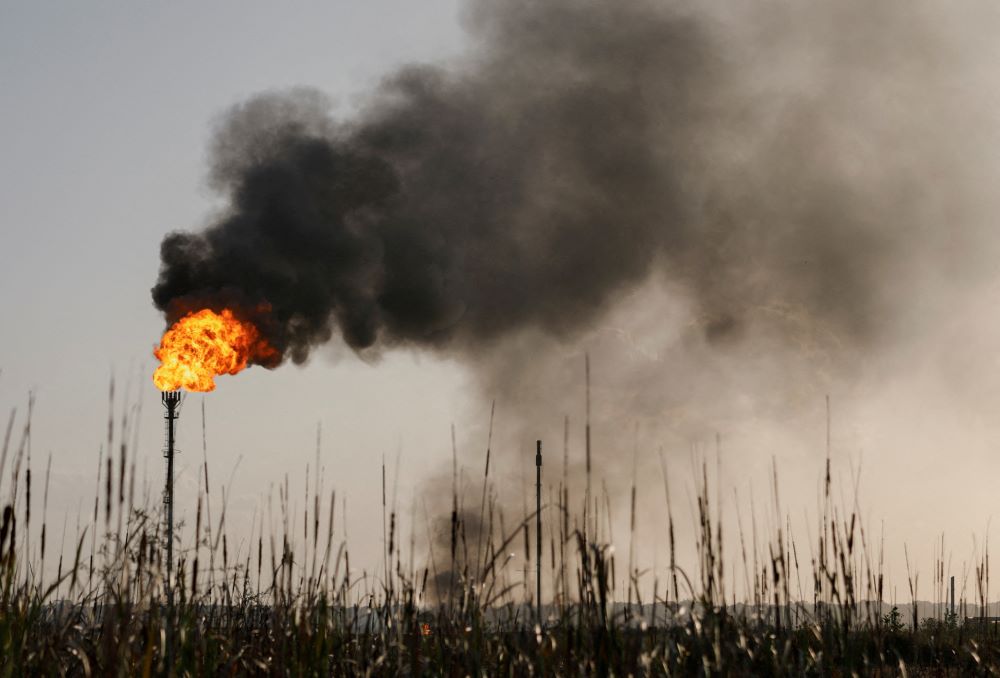
On the night side of the Earth, a satellite passing over the Niger Delta captures a stark image: a constellation of flames burning across the oil fields, flames that serve no purpose other than disposal. These are the flares of Nigeria’s oil industry, burning billions of cubic metres of natural gas into the atmosphere, gas that has been flared since the first oil barrel was lifted decades ago.
That same night, across much of Nigeria and the rest of Africa, millions of families sit in darkness or rely on kerosene lamps. Small businesses close early because generators are too expensive to run. Women in villages spend hours collecting firewood for cooking, breathing in smoke that kills more people annually than malaria.
The contrast could not be starker. Yet according to the latest Global Gas Flaring Tracker Report published by the World Bank’s Global Flaring and Methane Reduction (GFMR) Partnership, global gas flaring rose for the third consecutive year in 2025, reaching 167 billion cubic metres (bcm) — the highest level since 2019. The report, produced in collaboration with the Payne Institute at the Colorado School of Mines, reveals that the volume of gas wastefully burned in 2025 now equals Africa’s entire annual gas consumption.
And Nigeria remains at the heart of this global failure.
The Top Nine: 83 Percent of a Global Problem
The World Bank report identified nine countries responsible for 83 percent of global gas flaring in 2025: Russia, Iran, Iraq, Venezuela, Mexico, Libya, Algeria, Nigeria, and the United States. These nine nations accounted for less than half — 46 percent — of global oil production, yet they burn more than four-fifths of all flared gas.
“The remaining 90-plus countries account for just 17 percent of total flaring despite producing 54 percent of global oil,” the report noted. This statistic alone underscores a troubling reality: it is possible to produce oil with low levels of flaring, as demonstrated by countries including Kazakhstan, Norway, and Saudi Arabia. The problem is not technical; it is structural.
Nigeria recorded an 8 percent increase in flaring volumes in 2025, matching an 8 percent rise in oil production during the same period. Flaring intensity — the volume of gas flared per barrel of oil produced — remained largely unchanged. Insufficient infrastructure to transport associated gas to markets and aging gas processing plants with high downtime rates were identified as key drivers of Nigeria’s persistently high flaring levels.
The World Bank noted that “insufficient infrastructure to transport associated gas to markets continues to limit gas utilisation” in Nigeria. This finding comes despite Nigeria’s repeated commitments to eliminate routine gas flaring and its ambition under the Decade of Gas initiative to transform the country into a gas-powered economy.
$54 Billion Up in Smoke
The economic dimensions of this waste are staggering. The gas flared in 2025 had an estimated market value of **US$54 billion**, based on regional gas hub prices at Henry Hub, Europe’s TTF, and Asian LNG benchmarks. By comparison, the World Bank estimates that eliminating routine flaring globally would require US$70–100 billion in upfront investment. In other words, the value of gas wasted in a single year already amounts to roughly three-quarters of the cost of ending routine flaring entirely.
“The cost of addressing flaring is only 2 times the value of flared gas if brought to market,” the GFMR report stated. “The revenues that could be generated by ending routine flaring are estimated at US$54 billion. On average, this represents the majority of the approximately US$70–100 billion in upfront spending needed to achieve flaring reductions in line with both World Bank Group estimates and the International Energy Agency’s Net Zero Emissions by 2050 Scenario”.
Yet, as the report makes clear, the barrier to action is not technological.
“What holds back progress is not technical but structural — weak regulation, insufficient capital, limited markets, and a failure to treat flaring reduction as a priority,” the report’s authors stated.
For African countries, these structural barriers are particularly acute. The report notes that Angola and the Republic of Congo have low per capita electricity consumption and significant wasted associated gas, creating a clear opportunity for flaring reduction to support electrification.
A Missed Opportunity for Energy Security
The 167 bcm flared globally in 2025 exceeds the volume of LNG that transited the Strait of Hormuz that year, a strategic waterway through which 20 percent of global LNG supply passed. The energy value wasted annually from flaring is therefore enough to offset significant supply disruptions in global markets.
For Africa, the scale of this missed opportunity demands urgent attention. In Sub-Saharan Africa, the World Bank has found that power outages are associated with a 14 percent reduction in employment and a 19 percent reduction in skilled employment. Electricity shortages directly impact economic productivity and job creation, trapping communities in poverty.
“When firms have reliable electricity, they can invest in capital, expand output, and hire more workers,” the report states . Conversely, when energy is unreliable, “firms lose about 8 percent of total annual sales to power outages,” according to World Bank Enterprise Surveys data cited in the report.
The report also highlights that shortages of affordable LPG — which can be produced from associated gas — are causing economic disruptions in many countries, requiring families, typically women, to spend time collecting biomass for cooking rather than engaging in productive economic activities.
Zero Routine Flaring: A Goal Sliding Away
The Zero Routine Flaring (ZRF) by 2030 initiative, launched by the World Bank and supported by governments and oil companies, has become a benchmark for measuring progress. The latest data is not encouraging.
While countries that endorsed the ZRF initiative collectively showed markedly better performance compared to non-endorsers, the group still saw an overall increase in flaring in 2025. Among the top nine flaring countries, all but the United States recorded flaring increases in 2025. Mexico, the Republic of Congo, and Vietnam saw particularly large jumps in flaring intensity.
There are, however, pockets of progress. The United States achieved the largest absolute reduction in flaring of any country in 2025, cutting volumes by 0.4 bcm (7 percent), driven by the commissioning of the Matterhorn Express pipeline in the Permian Basin — a direct demonstration that infrastructure investment translates into measurable reductions.
Kazakhstan has achieved an 87 percent reduction in flaring since 2012 through sustained regulatory pressure, government commitment, and targeted infrastructure investment. These examples demonstrate that even large oil-producing economies can dramatically change course when political will is aligned with investment.
The Human Cost of Inaction
Gas flaring is not merely an economic and environmental problem — it is a human rights issue. The report estimates that global flaring in 2025 resulted in 429 million tonnes of carbon dioxide equivalent emissions, including 50 million tonnes in the form of unburned methane — a greenhouse gas more than 80 times more potent than CO2 over a 20-year period.
Methane emissions from flares may be significantly higher than conventional estimates, the report warns. If the “effective” destruction efficiency of flares is as much as 4 percent lower than the assumed 98 percent, methane emissions from gas flaring would be triple conventional estimates.
Locally, flaring emissions — including particulate matter, sulfur dioxide, and nitrogen oxides — harm the health of communities living near oil fields, contributing to respiratory illnesses, cardiovascular diseases, and premature deaths.
The Path Forward
For Nigeria and other flaring countries, the path to ending routine flaring is clear but requires sustained commitment. The GFMR Partnership provides catalytic grant funding, technical assistance, policy advisory services, and institutional strengthening to help developing countries cut flaring and methane emissions. In Nigeria, the Partnership has begun working with the regulator to establish a methane emissions baseline and provide targeted training to strengthen monitoring and reporting capacity.
The report urges governments and operators to treat flaring reduction as a priority, not an afterthought. Effective policy responses include enforced limits on routine flaring, fiscal incentives, tax policies, public-private partnerships for common infrastructure, and fair access rules for connecting to markets.
“The technologies, policies, regulations, and financing mechanisms needed to capture and utilize associated gas are available,” said Zubin Bamji, Manager of the GFMR Partnership, in the report. “What is missing, in too many places, is the leadership, prioritization, and governance needed to put these solutions into practice. The cost of inaction will be measured in wasted billions in revenue and energy insecurity for millions of people”.
For African governments and oil companies, the choice is stark. Continue burning a resource worth $54 billion annually while millions live in energy poverty, or make the structural and financial commitments to capture, process, and utilize associated gas to power homes, industries, and economies.
The gas is already there. The question is whether Africa’s leaders will finally choose to harness it.