
Katsina State’s decision to transfer the Kogo Forest Reserve to the Federal Government has brought renewed attention to the fragile state of Nigeria’s forest sector and the limits of subnational control in managing shrinking forest resources.
Governor Dikko Radda announced the handover at Government House in Katsina after the 18th National Council on the Environment meeting, describing it as a practical step to strengthen protection and restore order to forest governance. “We have formally handed over the Kogo Forest Reserve to the Federal Government in line with our shared commitment to environmental sustainability,” the governor said.
The Kogo Forest Reserve, located in Faskari Local Government Area, sits within a national forestry system under intense pressure. Federal forestry records show that Nigeria’s forest estate has been heavily depleted over decades. A forest resources study by the Federal Department of Forestry found that only about 974,674 hectares of forest reserves remain productive, while an additional 2.34 million hectares outside reserves are only partially productive. Combined, Nigeria’s total forest land was estimated at about 3.32 million hectares, with a gross timber volume of roughly 473.5 million cubic metres.
The depletion has been driven by sustained exploitation and weak management structures. According to the same federal study, natural forest growth averages between one and 1.5 cubic metres of round wood per hectare per year, a rate far below extraction levels. By 1998, forest plantations across the country covered only 184,611 hectares, underscoring the limited response to afforestation despite long standing policy commitments.
Against this backdrop, Governor Radda warned that forest degradation has evolved beyond an environmental issue into a security concern. He said that deforestation in Katsina and neighbouring states is increasingly linked to organised crime, particularly through commercial charcoal production. “Between 70 and 80 per cent of our forests remain ungoverned, posing serious environmental and national security risks that require decisive federal action,” he said.
Nigeria’s dependence on fuel wood and charcoal illustrates the scale of the challenge. Federal forestry data indicate that fuel wood and charcoal account for about 50 per cent of national primary energy consumption. Nearly 98 per cent of rural households in northern Nigeria rely on fuel wood for domestic energy, while cities consume about 80 per cent of the one million tonnes of charcoal produced annually. This demand places sustained pressure on forest reserves and unprotected communal forests.
The Federal Ministry of Environment has argued that forest protection must be linked to broader development and public health goals. Minister of Environment, Balarabe Lawal, disclosed at the Katsina meeting that the state now ranks second nationally in environmental performance. “Katsina now compares favourably with states that have far greater resources,” he said.
Mr. Lawal also tied environmental management directly to health outcomes. “By clearing stagnant water and managing our environment properly, we can prevent up to 70 per cent of common health challenges,” he said, while linking recent flooding across Nigeria to climate change, blocked waterways and human activities.
Forestry experts have long warned that Nigeria’s institutional framework weakens sustainable management. Under existing arrangements, state governments control forest reserves, while the Federal Department of Forestry plays only a monitoring role. Federal policy documents note that this structure allows state authorities wide discretion to de reserve forest land, often with limited oversight. The forestry policy itself lacks firm legal backing, and penalties for illegal logging remain low and poorly enforced.
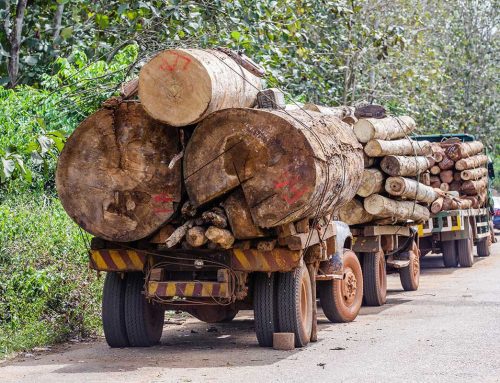
The result has been widespread illegal felling and declining timber quality. Federal estimates put total round wood production in 1997 at about 117.7 million cubic metres, harvested largely from southern states such as Cross River, Edo, Ondo and Ogun. Although Nigeria banned round wood exports in 1976, domestic demand from sawmills, plywood factories and informal fuel wood markets has continued to drive forest loss. The Federal Department of Forestry has described illegal logging and poor record keeping by states as major barriers to sustainable management.
Katsina’s decision to cede control of the Kogo Forest Reserve therefore reflects a broader debate about forest ownership and federal intervention. National forestry policy calls for consolidation and expansion of the forest estate, with a long-standing target of increasing forest cover from 10 per cent to 20 per cent of national land area. Federal assessments acknowledge that this target remains unmet, citing poor funding, weak enforcement and overlapping institutional mandates.
Alongside the forest handover, Governor Radda used the occasion to highlight Katsina’s push to reduce pressure on forests through alternative energy investments. He said the state is targeting 25 megawatts of solar power by 2026, with an additional 10 megawatts under development. “Government House now runs on a one-megawatt solar system, the General Hospital has been connected, and the State Secretariat is fully solar powered and independent of the national grid,” he said.
He added that Katsina is implementing what he described as Nigeria’s first hybrid wind solar power project in Lambar Rimi, with a planned capacity of 12 megawatts, and has secured approval for a one-megawatt
hydroelectric project at Danja Dam in partnership with the French Treasury. The state has also identified 12 public institutions responsible for about 92 per cent of government energy consumption and begun their transition to renewable power.
Federal environmental officials argue that such energy shifts are critical to forest conservation. Heavy reliance on fuel wood remains one of the main drivers of deforestation, particularly in northern Nigeria. Forestry data show that per capita fuel wood consumption in rural areas averages about 393 kilograms per year, compared to roughly 256 kilograms in urban households.
Nigeria’s forests also support non timber products and wildlife that underpin rural livelihoods and biodiversity. Federal studies estimate that non timber forest products generate about 177.6 billion naira annually for households through items such as fruits, honey, medicinal plants and wildlife. Yet more than 22 animal species are listed as endangered, largely due to habitat loss, bush burning and over exploitation.
The federal government has responded over time by creating eight national parks covering more than 2.2 million hectares, but most forest reserves remain under state control. Analysts within the forestry sector have repeatedly called for legal reforms to harmonise federal and state responsibilities and strengthen enforcement.
In Katsina, the transfer of the Kogo Forest Reserve places the forest under direct federal oversight, aligning it more closely with national conservation frameworks. Whether the move leads to improved protection will depend on funding, enforcement capacity and coordination between federal agencies and local communities.
For now, the handover signals a recognition by state authorities that Nigeria’s forestry crisis requires structural changes beyond state boundaries, at a time when climate change, energy demand and security pressures continue to converge on the country’s shrinking forests.