Communities across the Kebbi, Benue, Niger and other basin states are facing a new round of public health threats after weeks of flooding damaged water points, swept through latrines and submerged neighbourhood wells. The floodwater has not fully receded in several districts, leaving families to rely on cloudy pools, broken boreholes and shallow groundwater sources that were already vulnerable before the disaster. Many residents said they first noticed the change in water quality when the colour shifted from clear to brown and a metallic smell lingered after fetching.
This year’s flooding follows a familiar pattern documented by hydrologists in 2012, 2018 and 2022, when large parts of Nigeria recorded similar water quality failures after major river overflows. In each of those years, emergency agencies reported spikes in cholera, typhoid and gastrointestinal infections. Environmental researchers warned at the time that damaged groundwater zones in parts of the central and northern regions were at risk of heavy metal leaching during high water events. Those predictions were repeated this year when early rainfall records showed abnormal intensity along the Benue trough.
The recent findings by the Nigeria Hydrological Services Agency (NiHSA) appear to confirm those long-standing concerns. Laboratory samples, according to NiHSA, show elevated arsenic levels in several flooded communities and widespread faecal contamination in wells and boreholes that households depend on for drinking and cooking. Residents say they feel trapped between the floodwater left behind and the uncertainty of what lies inside it.
Arsenic Levels Above Safety Limits
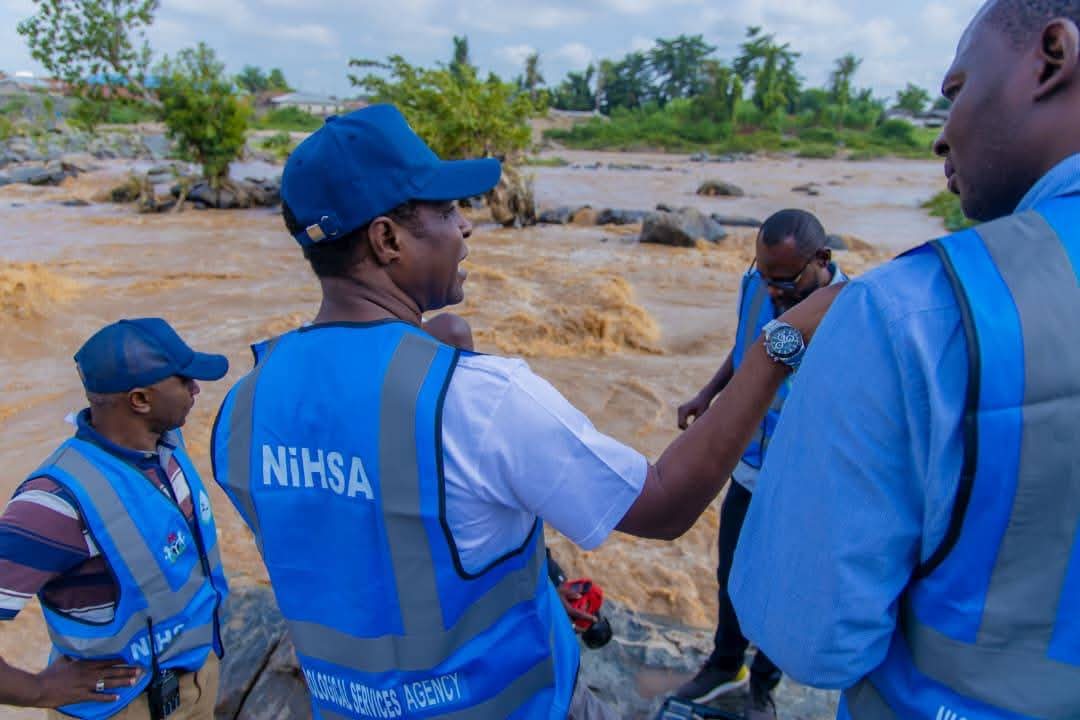
NiHSA’s field investigation was led by Umar Ibrahim, Director General of the agency. He said the team collected samples from communities in Kebbi, Benue, Kogi, Niger, Taraba, Nasarawa and Adamawa, alongside smaller sites in the south where flash floods occurred. “We tested the water for heavy metals and microbial contamination. The results confirmed elevated arsenic concentrations in multiple locations,” he said.
According to the laboratory test, arsenic values in some shallow wells ranged above the national limit of 10 micrograms per litre. In one site in Benue, a recorded value was more than triple that level. NiHSA attributed the contamination to the disturbance of arsenic-bearing soils and sediments during the flood. Mr. Mohammed said the findings align with earlier assessments carried out after the 2018 floods. “The geology of these zones makes them vulnerable. When the soil layers are disturbed by heavy flooding, contaminants migrate into groundwater,” he said.
According to NiHSA’s Flood Assessment and Validation Exercise, arsenic levels (0.75–3.56 mg/l) far exceeded the WHO limit of 0.01 mg/l, while E. coli and Total Coliforms (18–285 mg/100ml) indicate severe faecal pollution linked to flooding and poor sanitation.
NiHSA’s Director General, Umar Mohammed, described the situation as a looming public health emergency, calling for urgent Water, Sanitation, and Hygiene (WASH) interventions to prevent cholera, typhoid, and other waterborne diseases.
“Levels of arsenic and microbial contamination in water sources across flood-hit communities in Birnin-Kebbi, Argungu, and Augie LGAs is alarming” Umar Mohammed said.
Environmental scientist Maimuna Abdullahi of Modibbo Adama University, who reviewed the raw data, said the results were consistent with long term hydrological patterns. “Arsenic is not new in these formations. What is new is the scale of exposure caused by broken wells and submerged hand pumps. Once floodwater enters these structures, removal becomes more difficult,” she said.
Widespread Faecal Pollution
Beyond heavy metals, the NiHSA assessment documented widespread microbial contamination. Several boreholes tested positive for coliform bacteria, an indication of faecal matter introduced through collapsed latrines, septic tanks and open defecation areas washed into the flood.
Public health researcher Thomas Orji of the University of Abuja, who has studied waterborne outbreaks in the Central Nigeria, said this year’s contamination profile mirrors earlier crises. “The trend is almost identical to what we saw after the 2022 Benue floods. Faecal contamination spikes immediately because toilets and latrines are the first to collapse when the water rises,” he said. “Without chlorination or safe distribution systems, infections become widespread.”
Damage to Water Infrastructure
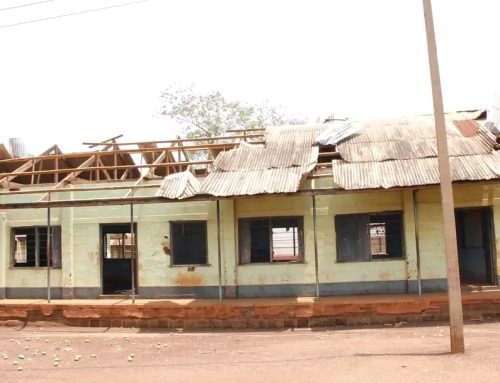
NiHSA’s field notes show that dozens of wells were destroyed or filled with silt. Some boreholes had their platforms cracked or washed away, allowing runoff to flow directly into the headworks. In many places, households continued drawing water from these damaged systems because no alternative existed.
According to Aminu Garba of Bayero University Kano, the destruction observed in the recent survey underscores Nigeria’s long-term failure to climate-proof rural water infrastructure. “These wells were never built to withstand flood surges of this magnitude. The water safety plans were inadequate. Once the platforms collapse, contamination becomes unavoidable,” he said.
Chemical Runoff from Farms
Environmental expert reported strong chemical odours in several flooded farmlands. Fertilisers, herbicides and pesticides stored in open sheds near the fields were washed into surface water. Although full toxicology results were still pending at the time of reporting, NiHSA noted that the presence of agricultural chemicals likely worsened the contamination profile.
The agency added that some of the heaviest contamination was recorded in areas where riverbanks collapsed, dragging soil layers, refuse pits and household waste into the water channels. Residents described seeing refrigerators, timber and metal sheets floating past their compounds during the height of the flooding.
Government Response Slow
State emergency agencies have delivered limited supplies of sachet water, but residents said the distributions were irregular and could not reach many rural settlements. Kebbi, Benue, Kogi and Taraba recorded the largest number of displacement sites that reported shortages of clean water after the floods.
NiHSA urged state governments to begin targeted decontamination of wells and to deploy temporary water treatment systems to high-risk zones. Mohammed, the director of the agency said immediate action was needed. “Communities cannot continue using these water points. The contamination is confirmed and dangerous. Safe water supply should be delivered without delay,” he said.
Linking Old Warnings to New Crises
Hydrologists have issued similar warnings for over a decade. After the 2012 nationwide flood, researchers at the National Water Resources Institute published a survey showing that groundwater contamination surged in riverine communities. In 2018, a comparable pattern was recorded in Niger and Benue states, with spikes in metals such as iron, manganese and arsenic. In 2022, when Nigeria recorded one of its deadliest flood seasons, the Ministry of Water Resources documented prolonged microbial pollution even six months after the water receded.
Communities Face Long Recovery
For now, residents continue to ration sachet water where available and rely on untreated sources where none exist. Volunteers have tried digging temporary drainage channels to keep runoff away from water points, though these efforts offer only minor relief. Community leaders said reconstruction of wells and boreholes may take months.
In Benue’s riverbank settlements, families who lost farms say they face both food and water shortages. The destruction of farmland may deepen the hardship, as stored grains were washed away along with household belongings.
What Comes Next
Environmental scientists say the next steps depend on how government agencies coordinate their responses. NiHSA’s findings have now been forwarded to federal and state authorities, who are expected to deploy decontamination teams, repair damage to water infrastructure and provide ongoing surveillance in contaminated zones.
As the floodwater slowly drains from the last pockets of the riverbanks, families continue to fetch water from wells that look unchanged from the outside but now carry risks that cannot be seen. The tests have confirmed what many feared but could not measure. The water that sustained their daily lives is now a threat they must navigate while waiting for help.
No one can say when the next flood will arrive. Hydrologists warn that rainfall patterns are shifting and river levels are becoming harder to predict. Yet the communities along Nigeria’s major rivers remain in the same position each year, facing the water as it rises and the contamination that follows when it falls.
In the coming months, recovery will depend on how quickly authorities can move clean water into the affected zones and how thoroughly damaged wells can be restored. Until then, families continue to walk to the same water points, hoping the next cup they draw will not make them sick.