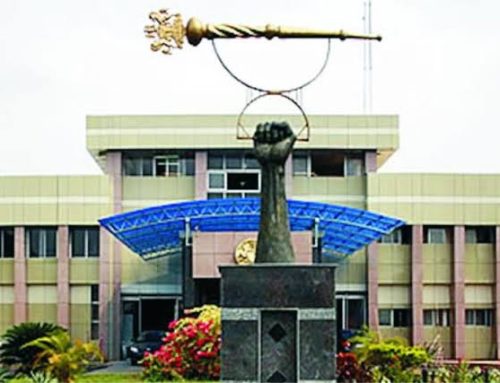

When the Nasarawa State House of Assembly voted to pass a law establishing a state climate policy and a Climate Change Advisory Committee, it signaled a shift from national rhetoric to state-level execution. In a region already grappling with erosion, flooding, desertification, and unstable harvests, the legislation aims to bring climate governance closer to where its effects are most visible.
If signed by Governor Abdullahi Sule, the law will establish a state agency and place the governor at the head of a committee mandated to steer climate policy in Nasarawa.
Nigeria’s 2021 Climate Change Act created a federal framework for climate action, but its results depend largely on subnational implementation. Translating that framework into real outcomes requires states that can budget, enforce, and coordinate policies that respond to local realities. Nasarawa’s step reflects a gradual movement across Nigeria to institutionalise climate action at the state level.
What Nasarawa’s law establishes
The legislation, passed on October 27, 2025, was sponsored by Muhammed Adamu of Keana state constituency and adopted unanimously. It establishes a state policy on climate change, provides for a Climate Change Advisory Committee chaired by the governor, and outlines the creation of a Climate Change Agency responsible for planning and implementation.
The House directed its clerk to prepare a clean copy for gubernatorial assent, which would complete the lawmaking process.
Beyond the legal formalities, the proposed framework seeks to integrate climate considerations into state and local government planning. It could make it mandatory for ministries to assess climate risks in their annual budgets, strengthen monitoring of environmental offences, and set up systems that track how adaptation funds are spent. These outcomes depend on enforcement, but the legal foundation is now in place.
How the federal Act shapes state options?
The 2021 Climate Change Act remains Nigeria’s most comprehensive environmental legislation. It established the National Council on Climate Change, introduced the concept of carbon budgeting in line with global emission targets, and created a Climate Change Fund to support mitigation and adaptation projects nationwide.
The Act also encouraged states to domesticate its provisions so that national commitments can translate into state-level plans. Environmental policy experts have long emphasised that the success of Nigeria’s national targets depends on how states interpret and act on the framework.
Professor Chukwumerije Okereke, a leading scholar on climate governance, has noted that states are the primary managers of land use, agriculture, and urban development—all sectors directly tied to climate resilience. By adopting their own laws, states can tailor interventions to their geography and economic realities.
Where Nasarawa fits in the wider state picture
Across Nigeria, states have progressed at different speeds in domesticating the federal Act. Rivers State took early steps in 2022 by passing its version of the Climate Change law. Lagos, Bayelsa, and Cross River have developed climate action plans, while other states, such as Edo and Kaduna, have adopted sectoral strategies on green growth.
However, research by environmental think tanks shows that fewer than one-third of Nigeria’s 36 states have concrete climate policies or budget lines. Many rely on ad hoc interventions or donor-funded projects without legislative backing.
Nasarawa now joins the smaller group of states working to establish permanent structures. With agriculture employing a majority of its population, the state faces the dual challenge of adapting to erratic rainfall while managing rising conflict between farmers and herders driven by shrinking grazing lands.
If the new agency functions effectively, it could direct resources toward practical interventions such as drainage improvement, early warning systems, and promotion of drought-resistant crops—steps that directly influence food security and livelihoods.
The financing question
One of the biggest obstacles to effective climate action remains funding. The federal Climate Change Fund provides a starting point, but Nigeria’s updated Nationally Determined Contribution (NDC) estimates the total cost of implementing its climate goals at over $177 billion by 2030.
State governments are expected to contribute through budget allocations, partnerships, and external finance. Transparent financial systems are critical if states like Nasarawa hope to access national or international funding streams.
Analysts suggest that states could create green budget lines, issue subnational green bonds, or enter co-financing arrangements with development partners. For instance, Lagos State recently leveraged partnerships with the United Kingdom and C40 Cities to fund adaptation projects. Nasarawa’s new law could position it to do the same—provided the proposed agency establishes clear financial management systems and reporting standards.
Without those structures, funding gaps risk slowing implementation.
Accountability begins with design
Experts say the effectiveness of climate institutions depends largely on how they are structured. Questions now centre on whether the Nasarawa Climate Change Agency will operate independently or as a department within another ministry. The level of autonomy will determine its ability to coordinate policies across sectors.
Another factor is inclusivity. Climate change affects diverse groups, and state agencies that include civil society, research institutions, and private actors often perform better in policy design and monitoring.
Lessons from the federal Climate Change Act show that clearly defined roles and accountability mechanisms are essential. Where institutions overlap or lack funding, progress tends to stall. Where responsibilities are clear and measurable, implementation improves.
For Nasarawa, embedding periodic public reporting—such as annual climate expenditure and emissions updates—could increase trust and attract investment.
Implications for vulnerable communities
The potential impact of the new law extends beyond governance. Nasarawa sits at the crossroads of multiple ecological zones—semi-arid in the north, rainforest fringe in the south, and flood-prone valleys along the Benue River.
Farmers in Obi and Doma Local Government Areas often lose crops to early floods, while herders face shrinking pasture in the drier zones. Urban residents in Lafia and Akwanga also experience flash floods caused by blocked drainage and poor waste management.
A functioning Climate Change Agency could help identify vulnerable hotspots, integrate local knowledge into adaptation planning, and direct relief efforts more efficiently.
It could also support programmes that train farmers in climate-smart agriculture, promote renewable energy in rural schools and clinics, and coordinate disaster response systems. These interventions are crucial for protecting livelihoods and reducing displacement linked to environmental stress.
Next steps and broader lessons
Civil society organisations have urged the Nasarawa government to move swiftly from legislation to implementation. They argue that the governor’s assent, followed by clear regulations and dedicated funding, will show the state’s commitment to turning policy into action.
Rivers State’s experience provides a model: after passing its law, it quickly established a coordinating office and began integrating climate indicators into its planning documents. Replicating such speed could help Nasarawa set an example for other states in the North Central region.
Experts also caution against treating the new law as a symbolic gesture. Building climate resilience requires long-term investment, regular public engagement, and consistent political will.
A step toward shared accountability
Nigeria’s Climate Change Act 2021 built the foundation for national response; Nasarawa’s new law represents one of the first bricks laid at state level in 2025. Whether it becomes a model for subnational implementation will depend on how the government structures its institutions, manages funding, and ensures transparency.
For communities along the riverbanks and farmlands of Nasarawa, the promise of this law will be measured not in documents but in safer homes, stronger yields, and fewer disasters.
Subnational climate governance is now emerging as Nigeria’s next frontier—and Nasarawa has taken a visible first step.