Global Climate Finance Gap
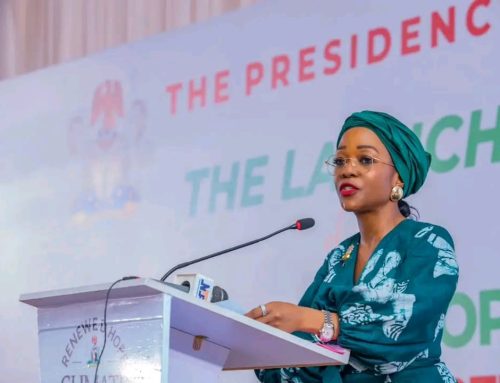
The COP30 summit, held in Belém, Brazil, in November 2025, framed a new chapter in international climate negotiations. The conference emphasized “Climate Action and Implementation,” with adaptation, biodiversity, forests, and climate justice as its core themes. Nigeria, represented by Vice President Kashim Shettima, positioned itself as a leader in West African climate action, advocating for increased global finance and investment in the continent’s green transition.
A key discussion at the summit revolved around the long-unfulfilled pledge of $100 billion per year by wealthy nations to support developing countries. While COP30 reinforced a roadmap to scale climate finance to at least $1.3 trillion annually by 2035, experts at the summit highlighted that Africa must not wait passively for external support. “We know the vital role fossil fuel plays for energy availability. We cannot completely push a narrative of total phase-out because of our energy dependence,” said a climate and energy expert reflecting on Africa’s strategic energy challenges.
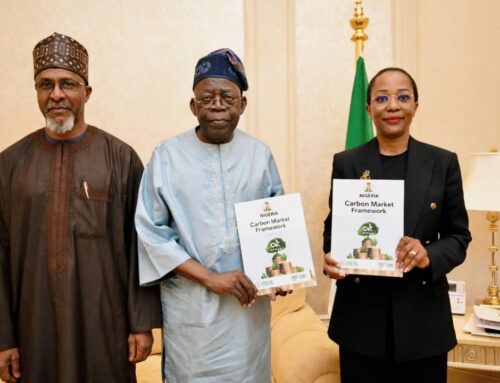
Mr. Shettima’s interventions underscored Nigeria’s stance. He highlighted domestic mechanisms, such as the National Carbon Market, which aims to mobilize $3 billion annually, alongside initiatives like the Great Green Wall, the Marine and Blue Economy Policy, and Climate-Smart Agriculture programs. Nigeria’s Third Nationally Determined Contribution (NDC 3.0) also targets emissions reductions and net-zero goals, emphasizing the country’s intent to shift the discourse from promises to actionable investment.
From Global to Local Accountability
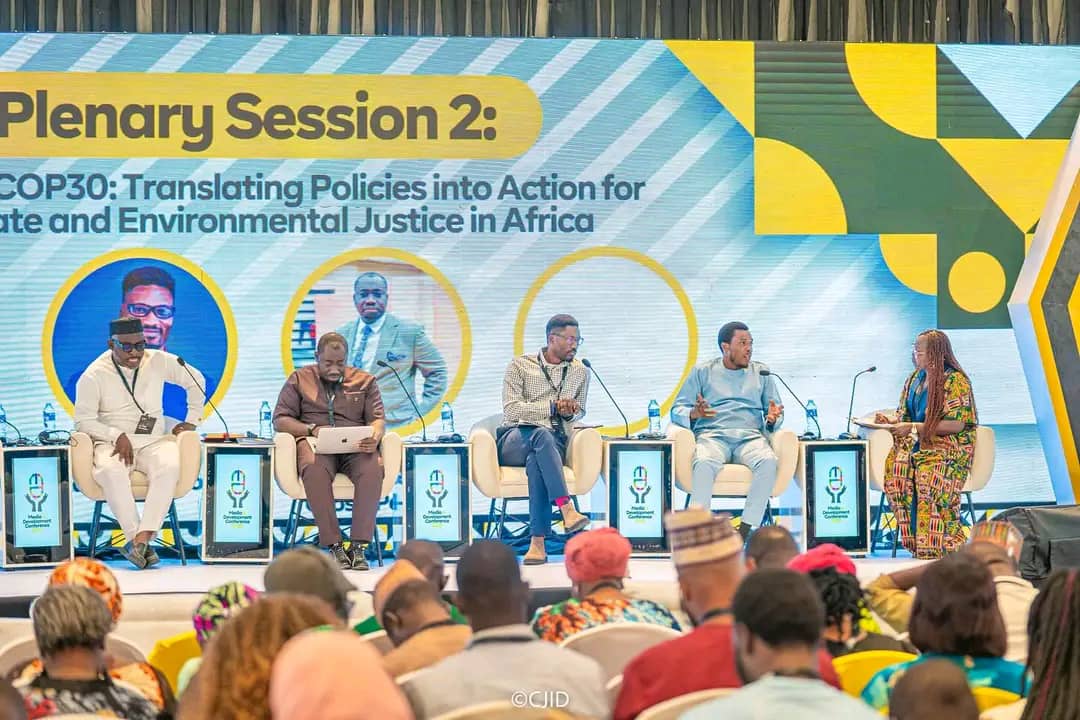
Beyond COP30, discussions at the 3rd Edition of the Media and Development Conference (MDC) 2025, held in Abuja from 24th to 27th November, expanded the conversation on climate action. Under the theme “Reimagining Democracy, Development, and Data for the Next Decade,” the four-day gathering convened 500 participants, including journalists, policymakers, civil society leaders, and researchers was organised by the Centre for Journalism Innovation and Development. A plenary session on 25 November, titled “Beyond COP30: Translating Policies into Action for Climate and Environmental Justice,” explored how African nations can move from global commitments to tangible local outcomes.
Experts emphasized that African climate policies risk collapse without community power. Adeolu Adekola, Project Manager, Open Climate Reporting Initiative at the Centre for Investigative Journalism, said: “If the community is missing on the day when decisions are made, it is going to be difficult for such policies to be implemented.” He argued that climate strategies fail when governments ignore the socio-economic realities of the people expected to enforce them. “Policies must reflect consent, local priorities and long-term ownership. When you have a framework that supports the community first, their decision, you consider their responses, and consent is important,” he added.
Technology and Environmental Enforcement
Weak enforcement of climate policies remains a persistent challenge. Gideon Ofosu, a climate and energy expert, explained that technology could mitigate gaps created by limited manpower. “We do not have law enforcement officers everywhere because they are limited. They should be targeted. That is what technology used to be for us,” he said. In Ghana, for instance, satellite imagery and monitoring systems track movements of individuals involved in illegal mining or deforestation. Automatic alerts can trigger shutdowns when activity occurs outside approved zones.
Mr. Ofosu also highlighted the importance of specialised environmental courts to fast-track prosecutions. “We need to interact with how these specialised environments unfold and provide capacity to judges,” he said. Without technical expertise, enforcement officers often lose motivation when offenders are arrested but not convicted.
Climate Justice and Civil Society
Civil society organisations (CSOs) play a crucial role in amplifying accountability for climate actions. Mike Terungwa, Executive Director of the Global Initiative for Food Security and Ecosystem Prevention, noted that African civil society often operates within overly centralized frameworks that disconnect policy from local realities. He observed that Nigeria’s climate commitments remain top-down and insufficiently responsive to communities facing flooding, drought, and mining pollution.
“This is a power tool in global politics. Communities must be mobilised to defend their food systems or risk dependence on foreign food imports,” Terungwa warned. Weak governance in the extractive sector further exacerbates inequality. “The master’s tools cannot dismantle the master’s house,” he said, urging activists to demand transparency and fairness in resource management.
Media’s Role in Climate Reporting
The conference highlighted the critical role of climate and environmental journalists in framing climate issues and uncovering hidden inequalities. Participants stressed that Africa cannot rely solely on Global North funding to address the continent’s climate challenges, as local impacts are already severe. Recent events, such as the June 2025 floods in Niger State that killed 200 people, underscore the urgency of adaptation and the need for informed reporting.
Effective climate reporting requires moving beyond reactive coverage of disasters to examining their underlying causes and tracking the implementation of national strategies, including targets like Nigeria’s goal for universal electricity access by 2035. Strengthening the capacity of journalists is essential, particularly in areas such as tracing financial flows, utilizing satellite imagery, and applying open-source intelligence to monitor environmental impacts. Initiatives supporting climate reporters across Africa aim to equip media professionals with these tools, ensuring that coverage not only informs the public but also holds policymakers accountable for translating climate commitments into tangible action.
Energy Transition and Justice
Energy transition was a central theme of the discussions, with speakers cautioning against abrupt fossil fuel phase-outs that could harm livelihoods. Experts noted that while COP30 did not explicitly mandate global fossil fuel reductions, it strengthened mechanisms for a just transition. “The just transition provides the basis for thinking about energy transition in a fair and inclusive manner while supporting energy access and providing solutions to climate impacts,” a panelist said.
Civil society representatives also called for a strategic approach to transition minerals. “Companies are coming to Africa to take lithium, copper and cobalt to produce solar panels and batteries and then sell back to us. Why are we not using our own resources to negotiate better instead of going to COP to beg?” Terungwa asked.
Community-Led Climate Action
Community engagement emerged as a cornerstone of effective enforcement. In Ghana, the Community Resource Management Areas (CREMA) model incentivized local forest protection through revenue-sharing and ecotourism opportunities. “Communities involved in enforcement have better food security,” Ofosu explained. The model illustrates that combining local buy-in, incentives, and technological monitoring can reduce illegal activities while protecting livelihoods.
Mr. Adekola reinforced that policies divorced from local realities are unlikely to succeed. “When governments ignore the socio-economic realities of the people, policies will fail,” he said. “Meaningful participation must begin before any stakeholder ceremony or official announcement.”
Information, Misinformation, and Climate Corruption
The conference also examined the growing risks of climate misinformation. Adekola noted a dangerous shift from outright denialism to politically manipulated narratives that serve elite economic interests. “What we are seeing is climate corruption. It is not only about whether climate change is real. It is more about economic control and power,” he said, highlighting cases of journalists being detained or barred from travel while covering climate events in Africa and Latin America.
Towards African Climate Resilience
Participants at MDC 2025 stressed that African climate policies cannot survive the next decade without placing communities at the center of decision-making and strengthening enforcement frameworks. Experts warned that without local empowerment, climate justice systems will remain fragile, exposing vulnerable populations to environmental and economic shocks.
“The master’s tools cannot dismantle the master’s house. Civil society must demand transparency, fairness, and long-term accountability,” Terungwa said. The consensus was clear: Africa’s climate resilience depends not only on international commitments but on domestic leadership, strategic media coverage, technology-enabled enforcement, and empowered communities.
Looking Ahead
The COP30 outcomes and subsequent discussions at MDC 2025 reflect both challenges and opportunities for Africa. While global finance pledges remain unfulfilled and energy transition debates are incomplete, mechanisms such as the just transition, community-led enforcement, and targeted technological interventions provide a pathway forward. African media, civil society, and policymakers must work in tandem to ensure that commitments translate into tangible outcomes that protect vulnerable communities, safeguard natural resources, and build sustainable livelihoods.