Plateau Tragedy Sparks National Alarm
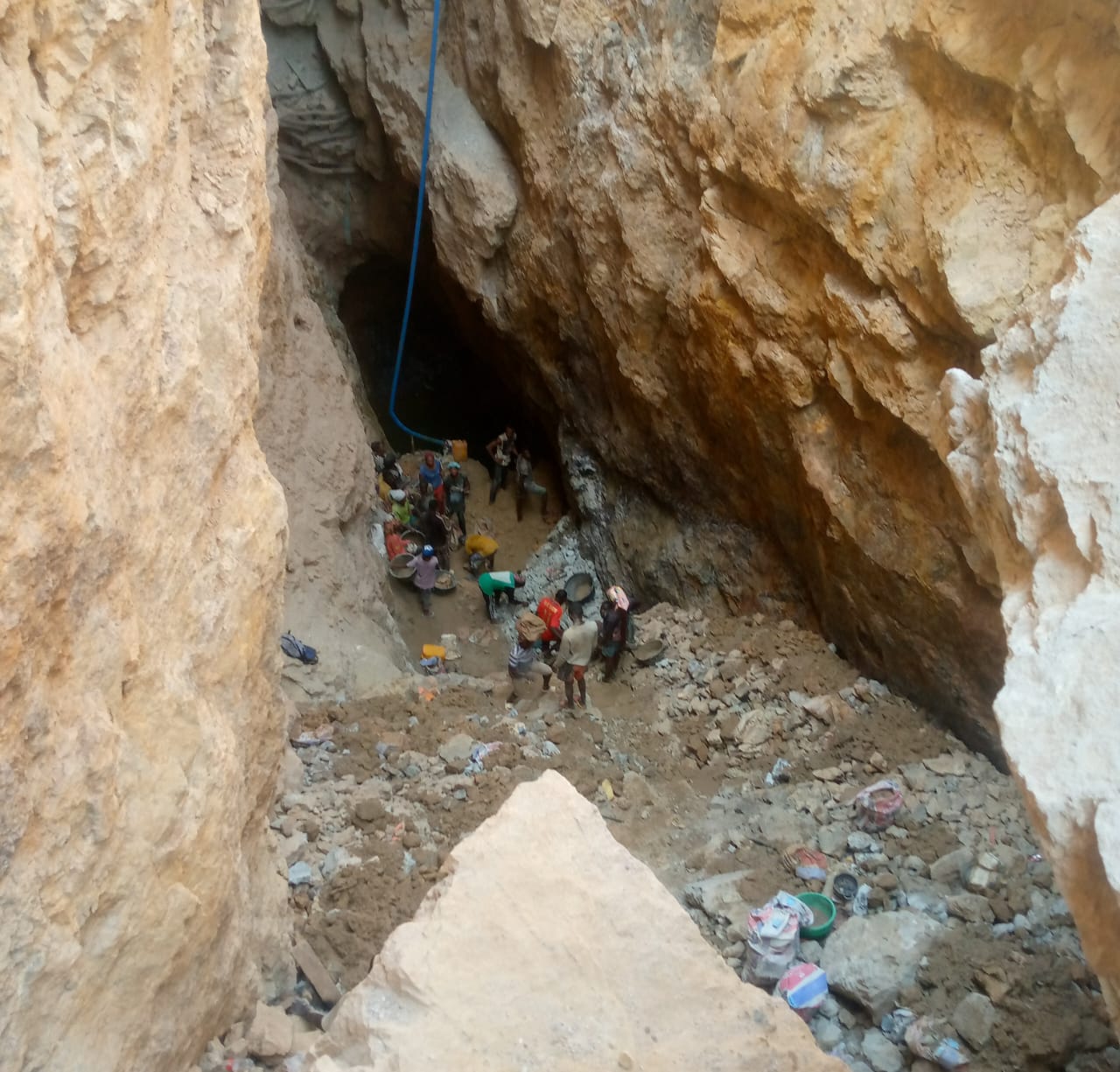
On the morning of Wednesday, February 19, 2026, 37 miners lost their lives in Kampani Zurak, a rural community in Wase Local Government Area of Plateau State, Central Nigeria. Survivors and witnesses describe an abandoned mining pit, formerly operated by Solid Unit Nigeria Limited under Mining Licence 11810, as the scene of the tragedy. The miners, mostly young men in their twenties and thirties, had left the site briefly for morning prayers before returning to the tunnels, unaware that lethal carbon monoxide gas had accumulated within the poorly ventilated underground chambers.
“The gas leaked and killed them,” said Safiyanu Haruna, a local miner, speaking to Daily Trust. “Around 5:30 a.m., they were all alive because they had left the site for morning prayer. When they returned, they were found in this condition.” Over 20 others sustained injuries and were rushed to Wase General Hospital. Funeral prayers for the deceased reportedly began the same day.
Following the incident, the Federal Government ordered the immediate closure of the mining site, directing the suspension of all activities under the license. Minister of Solid Minerals Development, Dr. Dele Alake, described the victims as “innocent citizens trying to earn a living” and dispatched a high-level investigative team led by Permanent Secretary Yusuf Yabo, including experts in mining, environmental compliance, and artisanal mining cooperatives.
“This team will probe the remote and immediate causes of the incident and recommend appropriate sanctions,” said Segun Tomori, Special Assistant on Media to the Minister, in a statement issued on February 19, 2026.
Preliminary assessments indicated that the affected pit had been abandoned after the mining company ceded it to the host community following local agitation for economic opportunities. Residents, unaware of the hazards, reportedly continued manual extraction, exposing themselves to the toxic gases that had accumulated in the unventilated tunnels.
A Pattern of Disaster Across Nigeria
The Plateau tragedy is not an isolated event. A decade-long analysis by Premium Times, covering 2015 to 2025, shows that over 200 Nigerians have died in artisanal and small-scale mining incidents, spanning more than ten states. Pit collapses accounted for over 80 percent of fatalities, while explosions, armed attacks, and gas leaks made up the rest.
In Nasarawa State in 2018, six miners were killed during a dispute over newly discovered gold in Uke, Karu Local Government Area. In 2019, Ebonyi State reported 22 deaths from a tunnel collapse. The following year, Nasarawa again experienced a collapse that claimed 18 lives. By 2021, a heavy rainfall-triggered pit collapse in Kogi State killed 25 miners, while 2022 saw twin disasters in Ogun and Benue States, killing nearly 50 people combined.
The bloodiest year in recent memory was 2025. In March, 11 miners died in a Boko Haram attack in Karaga, Niger State. In September, a massive collapse in Kadauri, Zamfara State, left dozens feared dead, described by witnesses as one of the worst mining disasters in Nigerian history. Across these incidents, a clear pattern emerges; informal mining, poor regulation, and inadequate safety measures continue to claim lives.
Economic desperation and unemployment drive many into artisanal mining. As Joe Edet, Vice Chancellor of Arthur Jarvis University and former Senior Special Adviser on Mineral Resources to Cross River State, notes, “In developing countries like Nigeria, minerals are mostly extracted by artisanal, small-scale, and illegal miners. Their activities are hardly or never regulated by government agencies. It might be on the increase because it attracts energetic young people due to its lure and promise of quick money.”
The Invisible Killer: Carbon Monoxide in Underground Mines
Experts attribute the deaths in Plateau to acute carbon monoxide poisoning, a hazard common in poorly ventilated underground sites. Muhammad Abdullahi, of the Anthony Nyong Climate Centre of Excellence at the University of Jos, explained that the gas binds to red blood cells, preventing oxygen from reaching vital organs. “Without oxygen, the brain and heart begin to shut down within minutes,” he said. Survivors reportedly experienced breathing difficulties, dizziness, headaches, chest pain, and fatigue before collapsing, all consistent with CO exposure.
Carbon monoxide’s invisibility—odorless, colorless, and tasteless—means miners often remain unaware of its presence until symptoms become life-threatening. Medical diagnosis requires a CO-oximeter to measure carboxyhemoglobin levels in the blood, with treatment involving immediate oxygen administration and, in severe cases, hyperbaric oxygen therapy.
Philip Jakpor, Executive Director of Renevlyn Development Initiative, said the tragedy underscores regulatory gaps: “The deaths of these young miners are tragic and may have been avoided if proper ventilation systems and safety monitoring were in place. This incident raises serious concerns about regulatory oversight and the protection of artisanal miners.”
Conflicting Reports and Government Response
Plateau State officials initially described the incident as an explosion. Joyce Ramnap, Commissioner for Information and Communication, told journalists that preliminary reports suggested a “tragic explosion” at the site. She indicated that about 33 people were inside the tunnel at the time, although the official death toll has since risen to 38, with over 20 injured. No forensic evidence was immediately available to clarify whether an explosion or gas leak was the trigger.
The Federal Ministry of Environment, through Minister Balarabe Lawal, communicated with Governor Caleb Mutfwang to enforce the shutdown of all mining activities pending a full investigation. A team of federal experts was scheduled to visit Wase to assess environmental hazards, occupational risks, and the state of abandoned pits. Beyond these measures, the framework, timeline, and leadership of the investigative inquiry remain unclear.
Communities in Mourning
In Kampani Zurak, families are left grappling with sudden loss and economic insecurity. Isa Jafaru, whose uncle died in the incident, said: “The responsibility for those children now rests on me. The government should come to our aid.” Another resident, Sapi’i Sambo, lost three nephews aged 25, 25, and 29. “They were young and hardworking, supporting their parents and siblings,” he said.
The mining site, historically used for lead and zinc extraction, sustains hundreds of workers, many between 25 and 40 years old. Community sources indicate this was not the first fatal accident at the site; in 2025, two miners reportedly died under similar circumstances.
Environmental and Health Consequences of Artisanal Mining
Nigeria’s artisanal mining sector, particularly in mineral-rich states like Plateau, Zamfara, Nasarawa, and Kogi, has long been associated with environmental degradation and public health risks. Lead poisoning remains a significant concern. In 2010, unsafe gold processing in Zamfara State killed over 400 children due to lead exposure, as documented by Resolve to Save Lives Nigeria and UNICEF reports. Even today, experts warn that lead contamination threatens children and pregnant women in rural mining communities.
Illegal or informal mining often involves the use of mercury, cyanide, and explosives without proper containment. In Cross River State, Joe Edet notes, “Pollution from runoffs of mining activities can kill organisms. Mercury dumped into rivers finds its way into fish, which are consumed by humans, causing poisoning, infertility, heart problems, and death of aquatic life.”
Land degradation is widespread. In Ogun and Ekiti States, quarrying for limestone and granite has left open pits, eroded soils, and deforested landscapes. Communities report respiratory illnesses from dust and the loss of arable farmland. In Kogi State, iron ore and coal mining has altered drainage patterns and destroyed natural vegetation, creating long-term ecological challenges.
Environmental violations extend beyond health risks. Reports by the Community Development Advocacy Foundation (CODAF) in Ebonyi State revealed the absence of Environmental and Social Impact Assessments, bypassed community consultations, and widespread pollution, intimidation, and land grabbing by mining companies, both local and foreign. Chinese mining firms operating in parts of the North have been accused of similar violations, though Beijing maintains that its companies comply with Nigerian law.
Security Risks and Enforcement Challenges
Illegal mining is often linked to broader security risks. In Niger State, a joint patrol by the Nigeria Security and Civil Defence Corps (NSCDC) was ambushed in February 2026, leaving an officer dead and a vehicle burned. Minister Alake described the killing as “criminal murder” and vowed prosecution, reiterating the government’s commitment to “zero tolerance for all forms of illegal mining”.
Federal efforts to curb illegal mining include the deployment of Mining Marshals, specialized NSCDC personnel tasked with enforcement, site inspection, and prosecution of unlicensed operators. Despite these measures, enforcement remains difficult due to armed syndicates, poor infrastructure, and overlapping regulatory mandates.
A Systemic Problem
Analysts argue that Nigeria’s recurring mining disasters reflect structural weaknesses in governance. The Minerals and Mining Act of 2007 mandates Community Development Agreements, environmental safeguards, and occupational safety standards. Yet enforcement is inconsistent. Licenses overlap with agricultural and residential land, abandoned pits go unreclaimed, and artisanal miners lack formal training and equipment. Communities are often excluded from monitoring and benefit-sharing.
Aminu Salisu Mu’azu, in a 2026 review of mining practices in Nigeria, highlighted systemic flaws: “Environmental degradation, whether through oil spills in the Niger Delta, radioactive mine tailings in Jos, or lead contamination in Zamfara, continues to undermine ecological balance and human health. Communities also face widespread social disruption, including livelihood losses, health risks, and displacement. At the core of these recurring challenges is the weakness of governance mechanisms.”
Moving Forward: Policy and Oversight Considerations
Experts say that the loss of lives, environmental degradation, and community disruptions linked to mining disasters can be significantly reduced through a combination of regulatory reform, technological adoption, and meaningful community engagement. Strengthening enforcement mechanisms is central: agencies such as the National Environmental Standards and Regulations Enforcement Agency (NESREA), the Federal Ministry of Environment (FMEnv), and state environmental bodies must be empowered with autonomy, technical expertise, and adequate funding to monitor mining sites, enforce Environmental Impact Assessments, and respond promptly to hazards. Equally crucial is genuine community involvement. Implementing frameworks like Free, Prior, and Informed Consent (FPIC) alongside legally binding Community Development Agreements ensures that residents participate in decision-making, share in benefits, and can hold operators accountable. Health interventions are another critical dimension, particularly in areas where lead, mercury, and other toxic substances are prevalent; access to chelation therapy, preventive medical services, and routine screenings can mitigate long-term public health risks. Technological tools, including satellite monitoring, remote sensing, and geospatial mapping, can provide regulators with real-time data to detect illegal operations, assess abandoned pits, and evaluate environmental hazards before they escalate into disasters. Finally, promoting alternative livelihoods in rural areas—through skills development, access to finance, and diversification programs—can reduce dependence on unsafe artisanal mining and break the cycle of economic vulnerability driving residents’ underground.
The Plateau tragedy underscores the urgent need for systemic reform across Nigeria’s artisanal mining sector. From Zamfara to Nasarawa, Kogi to Ogun, recurring incidents reveal a pattern of regulatory gaps, governance failures, and environmental neglect, where abandoned pits, chemical runoff, and unsafe working conditions claim lives and devastate communities. Experts stress that site closures, fines, and reactive measures, while necessary, are insufficient on their own. Only a coordinated, long-term strategy that integrates safety standards, environmental restoration, community participation, technological oversight, and economic alternatives can transform Nigeria’s mineral wealth into a sustainable resource rather than a recurring source of human and ecological loss. Policy makers are urged to act decisively: the lives of miners, the health of communities, and the protection of ecosystems depend on proactive regulation, technical enforcement, and inclusive planning.