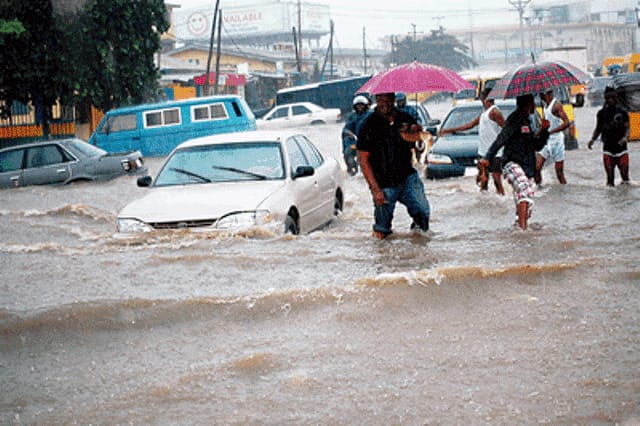
In late January, rain fell over parts of Lagos and Ogun states—weeks before the traditional onset of Nigeria’s rainy season. In Kwara State, residents reported showers on Christmas Day and again on December 30, an occurrence many described as unprecedented for the dry Harmattan period.
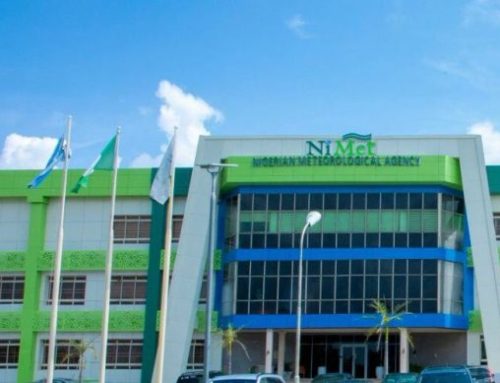
Those early rains were not isolated events. On February 8, 2026, climate and health experts told PUNCH Healthwise that Nigeria may be heading into a year of unusual rainfall patterns and intense heatwaves as long-established weather cycles continue to shift. Days later, the Nigerian Meteorological Agency (NiMet) formally unveiled its 2026 Seasonal Climate Prediction (SCP) at the NAF Conference Centre in Abuja, warning of erratic rainfall, prolonged dry spells and above-average temperatures across much of the country.
Taken together, the warnings point to a year that could test Nigeria’s food system, public health infrastructure and disaster response capacity.
A Forecast of Extremes
According to NiMet’s 2026 outlook, rainfall this year is expected to be inconsistent in both timing and distribution. Some states—including Bayelsa, Rivers, Akwa Ibom, Cross River, Benue, Kogi, Nasarawa and Oyo—may experience early onset rains. Others, such as Borno, are projected to see delayed onset.
Rainfall cessation may also occur earlier than normal in parts of Ogun, Osun, Ondo, Imo, Rivers, Akwa Ibom, Kogi and Niger states. At the same time, a delayed end of season is forecast for Lagos, Ogun, Anambra, Enugu, Cross River, Benue, Nasarawa and Kaduna.
The agency further projected a longer-than-normal rainy season in Lagos, Benue, Enugu, Ebonyi, Ogun, Oyo, Nasarawa, Anambra, Kwara, Kebbi, Kaduna, Gombe and Taraba, while parts of Borno, Yobe and Niger may experience a shorter season.
Beyond the shifting onset and cessation dates, NiMet warned of severe dry spells exceeding 15 days between March and May in parts of Oyo and Ogun states. Dry spells of up to 21 days are expected between June and August across several northern and central states. The short dry season, commonly known as the August break, may begin in late July and could be severe and prolonged in Lagos, Ogun, Ekiti and parts of Oyo.
Daytime and nighttime temperatures are also expected to be warmer than long-term averages in January, February, March and May.
Festus Keyamo, minister of aviation and aerospace development, described the seasonal prediction as “a vital planning tool” for sectors such as aviation, agriculture and disaster management. He urged farmers to rely on NiMet’s official rainfall onset dates rather than early rains already observed in parts of the south.
NiMet’s director-general, Charles Anosike, reaffirmed the agency’s commitment to science-based forecasting and the integration of artificial intelligence to improve accuracy.
Yet even as official forecasts attempt to map the months ahead, experts say climate variability is already outpacing familiar seasonal patterns.
“We Are No Longer Able to Predict Climate Conditions the Way We Used To”
Speaking to PUNCH Healthwise, Mr. Ahoton James, Director of Environmental Service at the Lagos State Primary Healthcare Board, described the early rainfall as an indicator of deeper climatic disruption.
“Since climate change is happening, the impact is that we are no longer able to predict climate conditions the way we used to. Rain can now fall at any time,” he said.
James pointed to the near absence of a typical Harmattan season in December 2025 and January 2026. “If you observe, there was no harmattan last year… The one we experienced just came on one morning in late January and evaporated in the afternoon. Those are the impacts of climate change,” he said.
He warned that Nigeria should brace for both unusual rainfall and extreme heat. “There is likely to be a rise in temperature beyond what we consider normal, and there is also the likelihood of heavier rainfall than what we used to experience,” he added.
Public health physician Prof. Adebayo Onajole told PUNCH Healthwise that increased rainfall and higher temperatures carry direct health consequences.
“When there is increased rainfall, there is usually an increase in disease occurrence because there will be more bodies of water. If temperatures rise, the rate of reproduction of disease vectors also increases,” he said. “All these factors are interconnected and relate directly to human life.”
Afolabi Abiodun, president of the Africa Environmental Health Organisation, called for improved emergency response and drainage maintenance. “Flooding has become frequent, and government response has often been inadequate. What is needed is preparedness, clear emergency response plans, proactive infrastructure maintenance, and timely intervention before disasters occur,” he said.
Climate Change Act and the Policy Gap
Former federal lawmaker Rt. Hon. Sam Onuigbo, sponsor of Nigeria’s Climate Change Act 2021, described the unusual December rainfall in Kwara as “a clear reminder that climate change is real.”
“Climate change is no longer an abstract issue discussed only at international forums. It is already affecting our agriculture, health, infrastructure, daily lives, and livelihoods,” Onuigbo said in a statement.
He emphasized the importance of fully implementing the Climate Change Act, particularly Section 26, which mandates climate education and awareness. Onuigbo linked the rainfall anomalies to broader trends of rising temperatures, deforestation and increased greenhouse gas emissions disrupting established weather cycles.
The law provides a national framework for mitigation and adaptation. But on farms across Nigeria, climate variability is already reshaping planting calendars.
Farming Without a Calendar
Dr. Emmanuel Moyinjesu, former Acting Provost of the Federal College of Agriculture, Akure, warned in an interview with Weekend Hope that the 2026 planting season may face major disruptions.
“Human interference with nature, including massive deforestation, urban expansion and emissions from industries and vehicles, have significantly altered the natural climate patterns we used to know,” he said.
Moyinjesu explained that Nigeria’s climate traditionally depends on two major air masses: the northeast trade winds that bring Harmattan conditions and the southwest monsoon winds that usher in rainfall. Disruption to these systems could reduce yields for crops such as oil palm and coconut, which rely on Harmattan winds for pollination.
“Farmers will be at the mercy of rainfall except there is massive irrigation,” he warned. “The dry season is becoming longer, and this will change the entire agricultural cycle.”
The warning comes as Nigeria’s food system already struggles with structural vulnerabilities. Agriculture contributes about 24 percent of Nigeria’s GDP, according to Minister of Agriculture and Food Security Abubakar Kyari. Smallholder farmers produce around 70 percent of the nation’s food.
Yet Kyari disclosed in September 2025, during the inauguration of the Green Legacy Rural Community Agriculture and Infrastructure Network (G.R.A.I.N) Pulse Centre in Jigawa, that Nigeria loses $10 billion annually to post-harvest losses.
He attributed the losses to poor storage, weak infrastructure, limited processing capacity, climate change, flooding, soil degradation and increasingly erratic rainfall.
A System Dependent on Rain
Despite vast arable land and abundant water resources, Nigeria relies predominantly on rain-fed agriculture. Experts say less than 10 percent of irrigation potential is utilized.
“We remain overly dependent on seasonal rain-fed agriculture, making us acutely vulnerable to climate shocks,” said Adebowale Onafowora, Founder and Managing Director of BIC Farms Concepts.
He traced the sector’s stagnation to decades of policy inconsistency and underinvestment following the oil boom of the 1970s. “The discovery of crude oil was the single largest disaster for Nigerian agriculture,” he said. “Easy oil money led to the neglect of the non-oil sector.”
Yinka Adesola, a stakeholder in the shea industry, highlighted the burden of tariffs on farm machinery and inputs, arguing that these policies increase production costs while the country imports subsidized food from abroad.
Dr. Abiodun Onalaja, CEO of Hyst Global Business Ltd and producer of Okun Rice, identified unresolved land tenure systems, lack of policy continuity and weak agro-processing value chains as persistent obstacles to growth.
Meanwhile, Oba Dokun Thompson, founder of the International Cocoa Diplomacy, emphasized the need for a coordinated national vision. “We are yet to define what we want as a nation when it comes to agriculture,” he said, calling for policies that treat farming as a serious business rather than a fallback occupation.
The Convergence of Risk
Erratic rainfall, extended dry spells, rising temperatures and fragile infrastructure intersect at a moment when Nigeria is also grappling with post-harvest losses and global food price pressures.
Climate variability amplifies existing weaknesses. Extended dry spells can wither seedlings and disrupt pollination. Intense rainfall can flood farmlands and overwhelm drainage systems. Higher temperatures accelerate crop evapotranspiration and increase the spread of pests and vector-borne diseases.
For public health officials, agricultural economists and climate scientists alike, 2026 represents not an isolated anomaly but part of a broader pattern.
NiMet’s forecast offers an early warning. Experts across sectors—from environmental health to agronomy—are calling for preparedness.
Investments in irrigation, drainage infrastructure, early warning systems, agricultural research and climate education have been repeatedly cited by scientists and policymakers. The Climate Change Act provides a legal framework. The agricultural sector remains central to national GDP and rural livelihoods.
As NiMet integrates artificial intelligence into forecasting and officials urge farmers to heed seasonal predictions, the question facing Nigeria is not whether rainfall patterns are changing. The evidence is already falling from the sky.
The challenge now lies in aligning climate science, agricultural planning, public health preparedness and infrastructure investment before erratic seasons translate into deeper food insecurity and economic loss.
In 2026, the rains may not follow the calendar. Whether policy follows the science may determine how severe the consequences become.