
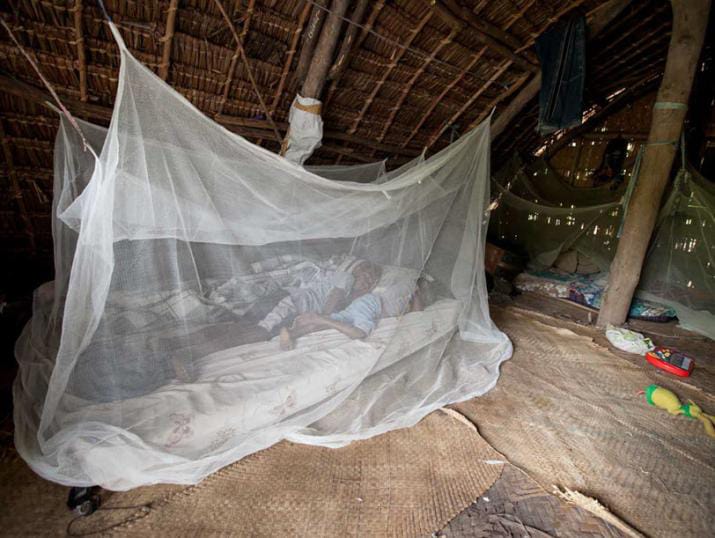
Climate change could reduce malaria transmission in parts of West and Central Africa while increasing risks in cooler regions of East and Southern Africa, according to a new study published in the journal Nature.
The study, titled “The past and future impact of climate change on childhood malaria in Africa”, found that rising temperatures have already altered malaria prevalence across the continent, with the overall effect masking significant regional differences.
Researchers from the Climate Impact Lab at the University of Chicago analysed more than 50,000 geolocated blood-sample surveys collected across sub-Saharan Africa over more than a century. They combined the data with climate models to estimate how human-caused climate change affected childhood malaria between 1901 and 2014 and how future warming could influence transmission through 2100.
The researchers found that climate change had likely increased malaria prevalence in East and Southern Africa while reducing it in parts of West Africa. Across sub-Saharan Africa, the historical net effect was approximately one additional case per 1,000 children aged two to 10, although the study’s confidence interval means the overall increase is uncertain.
Risks shift across regions
The study found that warming has made parts of East Africa, including the Ethiopian highlands, more suitable for malaria transmission. Malaria prevalence in the Ethiopian highlands increased by more than eight cases per 1,000 children over the period studied, equivalent to a 5 per cent increase, according to the researchers.
In contrast, rising temperatures have made parts of West Africa less favourable for malaria transmission. The study estimated that climate change had prevented about four cases per 1,000 children annually in the region by 2014, reducing prevalence by 1 to 2 per cent.
The researchers said the contrasting effects reflect the relationship between temperature and malaria transmission. Mosquitoes and the malaria parasites they carry thrive within particular temperature ranges. Transmission becomes less favourable when temperatures are too low or too high.
The findings suggest that countries with historically high malaria burdens, including Nigeria, could experience declining transmission in some areas as temperatures rise. However, the researchers cautioned that the effects will vary by location and depend on factors beyond temperature.
Rainfall, humidity, sanitation, housing conditions, population changes and access to healthcare also influence malaria transmission. The study therefore does not establish that malaria will disappear from Nigeria or that warming will automatically improve public health.
Future projections
The researchers projected that climate change could reduce average childhood malaria prevalence across sub-Saharan Africa by the end of the century, particularly in areas where temperatures become less suitable for transmission.
Under a high greenhouse gas emissions scenario, the study projected a reduction of about 20 cases per 1,000 children by 2100. Under a low-emissions scenario, the estimated reduction was about one case per 1,000 children.
However, declining average prevalence across the continent could conceal growing risks in cooler areas. In parts of the East African highlands and Southern Africa, malaria prevalence could increase by as many as 30 cases per 1,000 children under an intermediate emissions scenario by the end of the century, equivalent to an increase of about 20 per cent in some locations.
These shifts could expose communities with historically low malaria transmission to new public health challenges. Health systems in such areas may need to strengthen disease surveillance, diagnosis, prevention and treatment as climatic conditions change.
Emissions cuts matter
The study also found that limiting global warming to below 2°C could prevent some of the projected increases in malaria in cooler parts of the continent.
By the end of the century, keeping warming below that threshold could prevent an estimated five additional cases per 1,000 children in Southern Africa compared with a scenario in which global warming reaches 3°C. The researchers also identified potential benefits for high-elevation areas of East Africa.
The findings highlight the importance of considering climate projections in malaria control planning, particularly in areas where transmission could increase.
The researchers said improved healthcare, disease surveillance, economic development and targeted malaria control measures could counter climate-related risks in many places.
The study offers a more geographically detailed assessment of climate change’s effects on childhood malaria, showing that a decline in transmission in some regions does not necessarily mean the disease burden will fall everywhere.
It also underscores the need for public health authorities to prepare for changing patterns of transmission while continuing efforts to prevent malaria and reduce greenhouse gas emissions.

Leave A Comment