
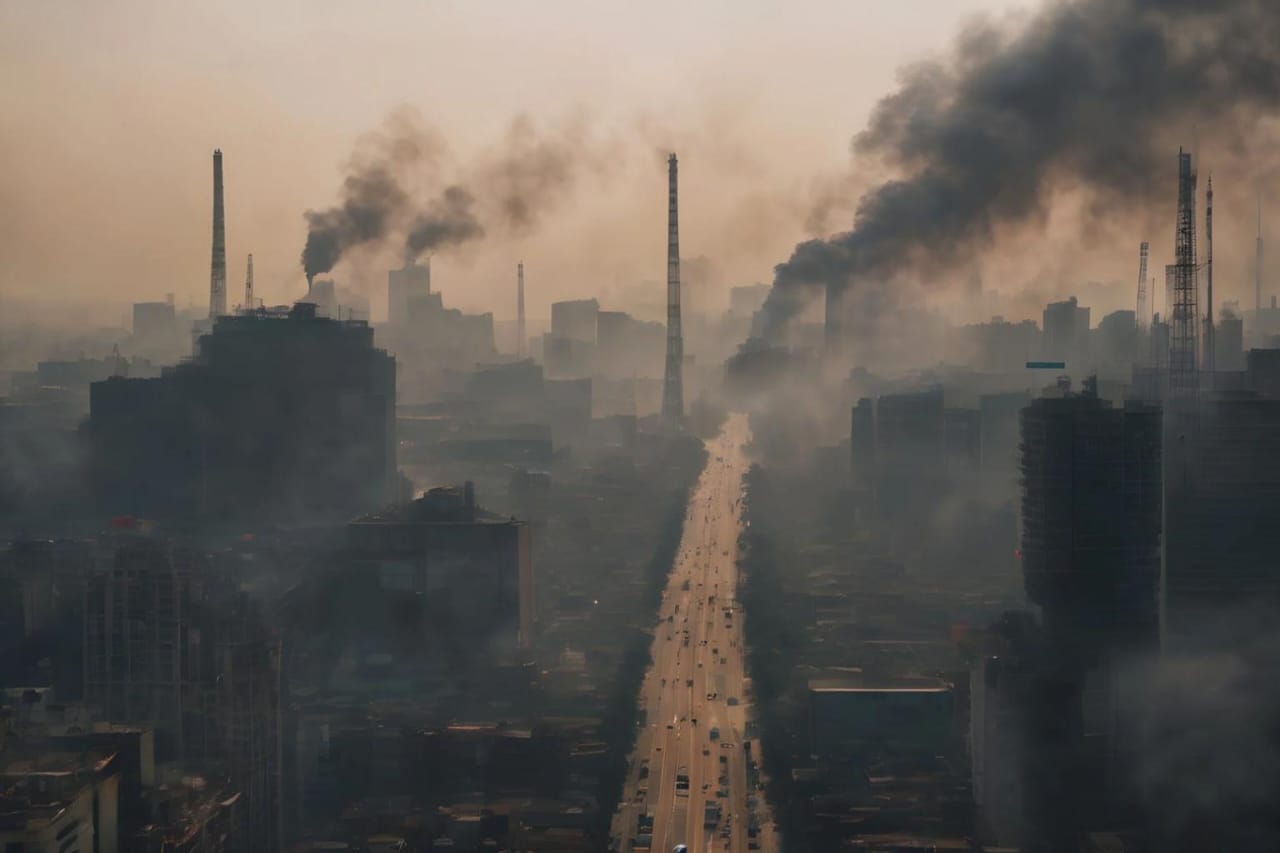
The World Meteorological Organization (WMO) says atmospheric concentrations of carbon dioxide, methane and nitrous oxide reached record highs in 2025, locking in further long-term global warming and increasing risks to people, economies and ecosystems.
In its latest Greenhouse Gas Bulletin, released on 27 October, the WMO reported that global average carbon dioxide (CO₂) concentration reached 426.8 parts per million (ppm) in 2025, equivalent to 153 per cent of pre-industrial levels recorded before 1750.
Methane and nitrous oxide, the second and third most important long-lived greenhouse gases linked to human activities, also reached unprecedented concentrations, reflecting the continuing accumulation of heat-trapping gases in the atmosphere.
“Another year, another new record. Greenhouse gases are trapping an unprecedented amount of heat in the atmosphere, providing energy for more extreme weather and associated risks to our economies and societies,” WMO Deputy Secretary-General Ko Barrett said.
She warned that carbon dioxide remains in the atmosphere for a long time, affecting the global climate for decades and even centuries.
CO₂ levels keep rising
The report found that atmospheric CO₂ increased by 2.8 ppm between 2024 and 2025. Although this was below the exceptional increase of 3.6 ppm recorded between 2023 and 2024, it remained above the average annual growth rate of the past decade.
The WMO said the global average CO₂ concentration has risen significantly since the organisation began publishing its annual bulletin in 2004, when monitoring stations recorded 377.5 ppm.
According to the report, the NOAA Annual Greenhouse Gas Index shows that the warming effect of long-lived greenhouse gases increased by 56 per cent between 1990 and 2025, with carbon dioxide accounting for about 81 per cent of that increase.
The WMO attributed the continuing rise in CO₂ largely to fossil fuel combustion. About half of the carbon dioxide emitted by human activities each year remains in the atmosphere, while land ecosystems and oceans absorb the remainder.
Oksana Tarasova, a WMO senior scientific officer, said the slower CO₂ growth rate in 2025 partly reflected the recovery of land carbon sinks and reduced fire emissions following the strong 2023–2024 El Niño.
However, she warned that concentrations are expected to rise further in 2026 because of continued fossil fuel burning and the potential impact of a developing El Niño on the ability of land ecosystems to absorb carbon dioxide.
Methane and nitrous oxide
The report found that global average methane concentration reached 1,948 parts per billion (ppb) in 2025, equivalent to 267 per cent of its pre-industrial level.
Methane accounts for about 16 per cent of the warming effect of long-lived greenhouse gases. The WMO said approximately 65 per cent of methane emissions come from human activities, including livestock farming, rice cultivation, fossil fuel exploitation, landfills and biomass burning. The remainder comes from natural sources, including wetlands.
Nitrous oxide concentration also reached a record 339.1 ppb in 2025, equivalent to 126 per cent of its pre-industrial level. Sources include natural processes, fertiliser use, biomass burning and industrial activities.
The WMO said these gases contribute to the accumulation of heat in the atmosphere, reinforcing the need to reduce emissions across energy, agriculture, waste management and industrial sectors.
Energy transition risks
The report also highlighted concerns about sulphur hexafluoride (SF₆), a potent greenhouse gas used mainly in electrical equipment, including power distribution systems.
SF₆ concentrations have risen steadily over the past three decades alongside expanding electrification. The gas has an atmospheric lifetime exceeding 1,000 years and a 100-year global warming potential approximately 24,300 times that of carbon dioxide, according to the WMO.
The organisation warned that emissions of SF₆ and leakage of hydrogen used in some clean-energy applications could undermine some climate benefits of the energy transition if left unmanaged.
Hydrogen is not itself a greenhouse gas, but leakage can affect atmospheric chemistry and indirectly contribute to warming.
The report said continued monitoring of these gases is essential as countries expand electricity infrastructure and develop lower-carbon energy systems.
Pressure for climate action
The WMO released the bulletin ahead of the United Nations climate conference, COP31, scheduled to take place in Antalya, Türkiye, from 9 to 20 November 2026.
The meeting is expected to focus on translating climate commitments into concrete action as countries face mounting pressure to reduce emissions and limit global warming.
The WMO said its Global Atmosphere Watch programme coordinates measurements of greenhouse gases worldwide, providing evidence to help governments assess emissions trends and evaluate climate policies.
The latest findings reinforce the urgency of reducing fossil fuel emissions, strengthening greenhouse gas monitoring and accelerating the transition to cleaner energy while ensuring that emerging technologies do not introduce new sources of warming.



Leave A Comment