In late January and early February, rainfall appeared across parts of southwestern Nigeria, a period that traditionally falls within the country’s dry season. For many farmers preparing for the next planting cycle, the showers seemed like a signal that the rainy season had begun earlier than usual.
But meteorologists say the rains may be misleading.
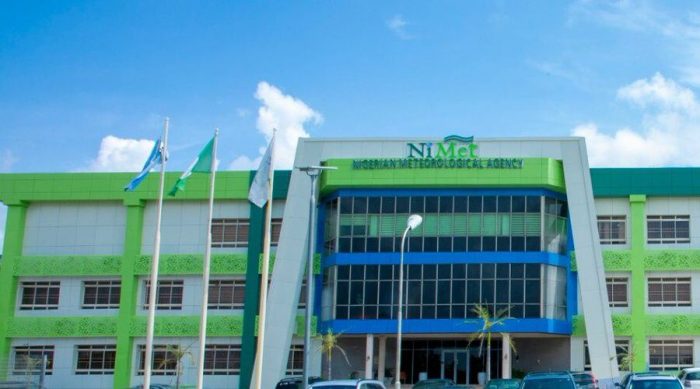
The Nigerian Meteorological Agency (NiMet) has cautioned farmers not to begin planting yet, warning that the recent rainfall does not mark the official start of the farming season and could expose crops to drought conditions if farmers act too quickly.
Speaking during the “Dissemination of 2026 Weather Forecast in Oyo State” programme held in Ibadan, Mr. Emmanuel Udoh, the Oyo State Meteorological Manager of NiMet, described the early rainfall as “deceptive.”
He advised farmers across the state to wait for the scientifically determined onset of the rainy season before planting crops.
“The variable we look at is when the soil moisture content is up to 50 percent, which is enough for crops to use for nutrition and growth,” Udoh said during the event, according to the News Agency of Nigeria (NAN).
“That’s what the agency calls the ‘onset of rain,’ and this is the right time farmers should start planting,” he added.
According to NiMet’s forecast, the actual onset of the rainy season in Oyo State is expected to occur between April 15 and the end of April, several weeks away from the rainfall recently observed across the region.
Udoh warned that early showers could tempt farmers to begin planting prematurely.
“The recent rainfalls in some parts of the state are not suitable for planting, so farmers should not be tempted to start planting,” he said.
The warning comes at a time when Nigeria’s seasonal weather patterns are becoming increasingly unpredictable, forcing farmers and policymakers alike to confront the growing challenges posed by climate variability.
When the Rain No Longer Follows the Calendar
The advisory issued in Oyo State echoes broader warnings contained in NiMet’s 2026 Seasonal Climate Prediction, which the agency unveiled earlier this year in Abuja.
As previously reported by Nigeria Climate Watch, the forecast suggests that rainfall across the country in 2026 may be erratic in timing and distribution, with some areas experiencing early onset rains while others face delayed rainfall or prolonged dry spells.
NiMet’s outlook projects early onset rainfall in several states, including Bayelsa, Rivers, Akwa Ibom, Cross River, Benue, Kogi, Nasarawa and Oyo, while Borno State is expected to experience a delayed onset.
The agency also warned that dry spells lasting up to 15 days could occur between March and May in parts of southwestern Nigeria, including Oyo and neighbouring Ogun State.
Longer dry periods of up to 21 days are expected between June and August across several northern and central states.
For farmers who rely almost entirely on rainfall to sustain their crops, these shifts could have serious implications.
Early planting followed by dry spells can destroy seedlings before they are established, reducing yields and forcing farmers to replant at additional cost.
The concern has become more urgent as unusual weather events have already been recorded across parts of Nigeria this year.
In Kwara State, residents reported rainfall on Christmas Day and December 30, an occurrence many described as unprecedented for the typically dry Harmattan season.
Similarly, Lagos and Ogun states experienced rainfall in late January, weeks before the traditional onset of the rainy season.
Climate and health experts who spoke to PUNCH Healthwise earlier this year said such unusual patterns could signal deeper shifts in Nigeria’s climate system.
Climate Variability and the Limits of Prediction
Mr. Ahoton James, Director of Environmental Services at the Lagos State Primary Healthcare Board, told PUNCH Healthwise that the early rainfall reflects a growing disruption in the country’s traditional weather cycles.
“Since climate change is happening, the impact is that we are no longer able to predict climate conditions the way we used to. Rain can now fall at any time,” he said.
James pointed to the unusual absence of a typical Harmattan season between December 2025 and January 2026 as another indicator of climatic shifts.
“If you observe, there was no harmattan last year,” he said. “The one we experienced just came on one morning in late January and evaporated in the afternoon. Those are the impacts of climate change.”
He warned that Nigeria could experience both extreme heat and heavier rainfall in the months ahead.
“There is likely to be a rise in temperature beyond what we consider normal, and there is also the likelihood of heavier rainfall than what we used to experience,” he said.
Such changes carry implications not only for agriculture but also for public health and disaster preparedness.
Public health physician Prof. Adebayo Onajole explained that increased rainfall and higher temperatures could lead to a rise in disease transmission.
“When there is increased rainfall, there is usually an increase in disease occurrence because there will be more bodies of water,” Onajole told PUNCH Healthwise.
“If temperatures rise, the rate of reproduction of disease vectors also increases. All these factors are interconnected and relate directly to human life.”
Farmers Navigating Uncertainty
At the Ibadan event where NiMet issued its warning, agricultural officials and farmers acknowledged that weather information has become an increasingly important tool for decision making.
The Oyo State Commissioner for Agriculture and Rural Development, Mr. Olasunkanmi Olaleye, said seasonal climate forecasts help farmers plan their activities more effectively.
“The weather forecast advisories for the planting season provide farmers with crucial information on the best time to start planting,” Olaleye said.
He added that the state government continues to support agricultural production through input distribution and land preparation programs.
According to him, about 12,000 bags of fertilizer were distributed to farmers in 2025, while the cost of ploughing approximately 30,000 hectares of farmland was subsidised.
Farmers’ representatives attending the event welcomed the information but also highlighted other challenges affecting agricultural production.
Mr. Abass Adewunmi, chairman of the All-Farmers Association of Nigeria (AFAN) in Oyo State, urged authorities to address security concerns affecting farmers.
He said incidents of kidnapping and crop destruction by roaming cattle herders have discouraged cultivation in some communities.
Adewunmi also advised cassava farmers not to be discouraged by recent price declines.
Instead, he encouraged them to take advantage of the coming rainy season to expand cultivation.
Similarly, Pa Bamiji Alabi, a farmers’ leader from Akinyele Local Government Area, stressed the importance of timely government support for farmers.
Delays in providing farm inputs and extension services, he warned, could limit agricultural productivity.
A Farming System Dependent on Rain
Nigeria’s agricultural sector remains heavily dependent on rainfall, a structural vulnerability that experts say increases exposure to climate shocks.
According to Minister of Agriculture and Food Security Abubakar Kyari, agriculture contributes about 24 percent of Nigeria’s gross domestic product, with smallholder farmers producing roughly 70 percent of the country’s food supply.
Yet irrigation infrastructure remains limited.
Experts estimate that less than 10 percent of Nigeria’s irrigation potential is currently utilized, leaving farmers highly dependent on seasonal rainfall.
Agricultural stakeholders warn that climate variability could worsen existing challenges within the sector.
Dr. Emmanuel Moyinjesu, a former acting provost of the Federal College of Agriculture, Akure, has warned that disruptions in rainfall and temperature patterns could affect crop production across the country.
“Human interference with nature, including massive deforestation, urban expansion and emissions from industries and vehicles, have significantly altered the natural climate patterns we used to know,” he said in an interview with Weekend Hope newspaper.
He noted that Nigeria’s climate is traditionally shaped by two major air masses: the northeast trade winds, which bring dry Harmattan conditions from the Sahara, and the southwest monsoon winds, which carry moisture from the Atlantic Ocean.
Disruptions to these systems could alter rainfall distribution and affect crops that depend on specific seasonal conditions.
“Farmers will be at the mercy of rainfall except there is massive irrigation,” Moyinjesu warned. “The dry season is becoming longer, and this will change the entire agricultural cycle.”
Signals for Policy and Planning
NiMet officials say seasonal forecasts are intended to help governments, farmers and businesses prepare for climate variability.
During the launch of the 2026 Seasonal Climate Prediction earlier this year, Minister of Aviation and Aerospace Development Festus Keyamo described the forecast as an important planning tool.
He urged Nigerians, particularly farmers, to rely on NiMet’s official rainfall onset dates rather than early rains already observed in parts of the country.
The agency’s Director General, Charles Anosike, also reiterated NiMet’s commitment to improving forecast accuracy through scientific research and technological innovation.
For policymakers and agricultural planners, the warnings about deceptive rainfall highlight the growing need to integrate climate science into farming practices and infrastructure planning.
Nigeria’s Climate Change Act of 2021 provides a national framework for climate mitigation and adaptation, but experts say effective implementation will depend on coordinated action across multiple sectors.
As early showers continue to fall across parts of the country, the central question facing Nigeria’s agricultural system is how quickly farmers and policymakers can adjust to weather patterns that no longer follow familiar calendars.
For now, NiMet’s message to farmers remains clear.
The rains seen in February may feel like the start of the season, but the soil and the science say otherwise.