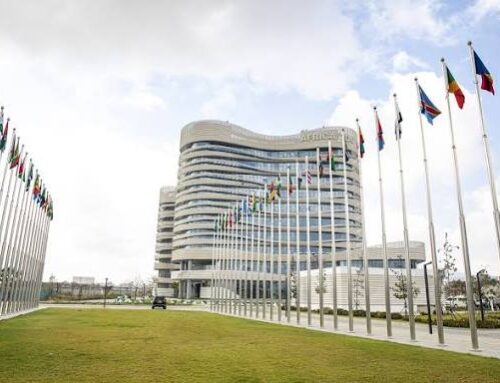
On a humid Monday in Abuja, Nigeria’s federal government framed climate change in terms Nigerians increasingly recognise not as distant environmental risk but as a mounting health emergency. Speaking at a stakeholder engagement on the National Emergency Response to Environment-Related Diseases Arising from Greenhouse Gas Emissions, the Minister of Environment, Balarabe Abbas Lawal, warned that respiratory, cardiovascular, and other environment-linked diseases are rising at a pace Nigeria’s health system is struggling to absorb.
“What we are facing today is no longer solely an environmental issue but a public health emergency,” Lawal said in a statement delivered on his behalf by the ministry’s permanent secretary, Mahmud Kambari. “The burden of disease associated with poor environmental quality is increasing faster than our health system can accommodate.”
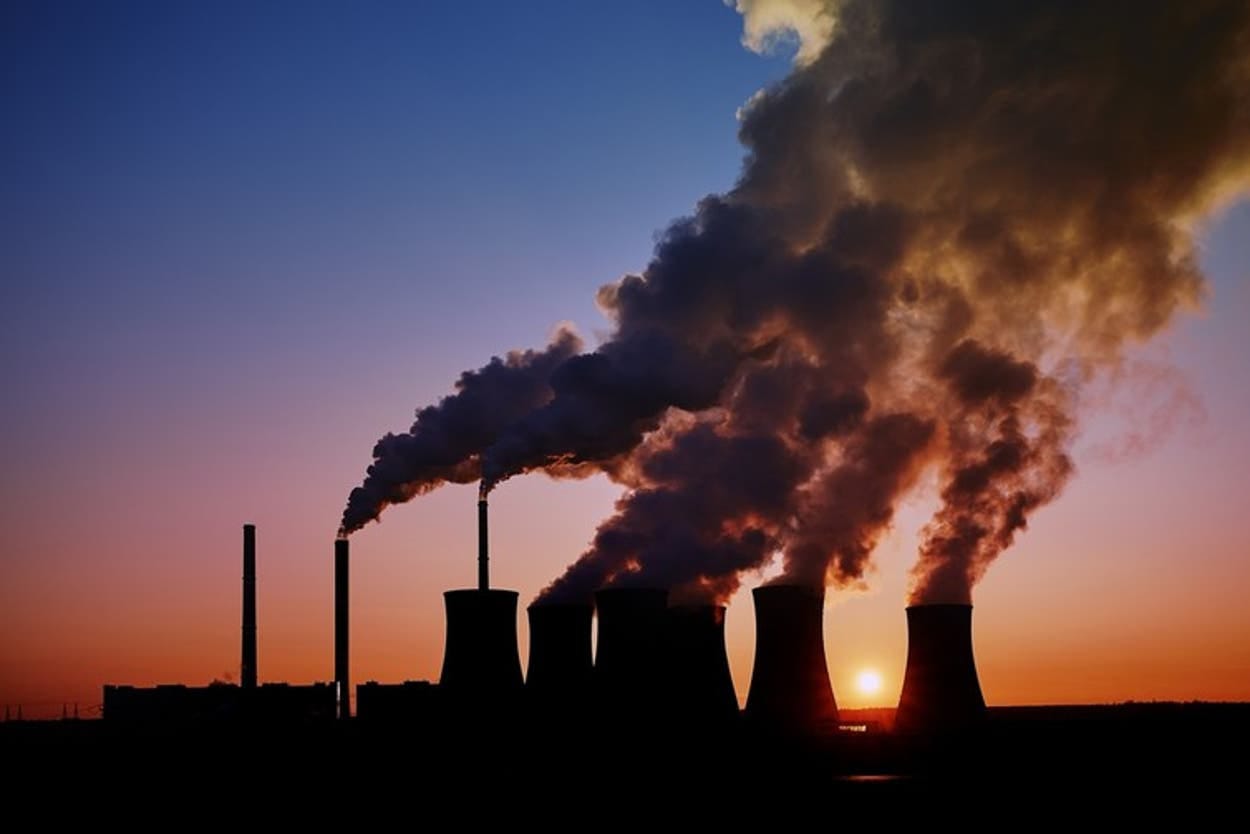
The government’s declaration reflects a growing shift in how climate impacts are being understood in Nigeria. Rising temperatures, worsening air quality, gas flaring, traffic emissions, and industrial pollution are no longer discussed only in terms of ecosystems or climate targets. They are increasingly linked to hospital admissions, lost productivity, and shortened life expectancy.
That connection is reinforced by academic evidence. A peer‑reviewed study by economists Oluwatoyin Matthew, Romanus Osabohien, Fasina Fagbeminiyi, and Afolake Fasina, published in the journal Energy Economics Letters, provides one of the most detailed empirical examinations of how greenhouse gas emissions affect health outcomes in Nigeria. Using more than three decades of national data, the researchers found a statistically significant long‑run relationship between rising emissions and declining life expectancy.
Taken together, the government’s warning and the study’s findings point to the same conclusion. Nigeria’s emissions trajectory is no longer only a climate problem. It is a public health risk already shaping how long Nigerians live and how healthy those years are.
A health crisis hiding in plain sight
Nigeria’s rapid urbanisation, industrial expansion, and rising energy demand have brought economic growth, but they have also intensified environmental stress. Lawal acknowledged this tension directly.
“Nigeria, like many rapidly developing nations, is experiencing accelerated urbanisation, industrial expansion, rising energy demand, and intensified transportation activities,” he said. “These are indicators of economic growth and modernisation. However, they have also resulted in a troubling increase in environmental pollutants, particularly greenhouse gases, which have both direct and indirect impacts on human health.”
Environmental surveillance data, health records, and peer assessments, according to the minister, show a steady rise in illnesses linked to poor air quality and environmental degradation. Respiratory conditions, cardiovascular diseases, and other pollution‑related ailments are becoming more common, particularly in urban and industrial hubs.
The health impacts are not evenly distributed. Children, the elderly, and low‑income communities living near industrial zones, busy highways, or gas‑flaring sites face higher exposure. For many households, this translates into growing medical bills and lost income.
“Families are spending more on treatment, workforce productivity is declining, and environmental degradation continues to undermine our development goals,” Lawal said.
What the data shows
The academic evidence supports these observations with quantitative clarity. The study by Matthew and colleagues analysed time‑series data from 1985 to 2016, examining how total greenhouse gas emissions, proxied largely by carbon dioxide emissions, affect health outcomes measured through life expectancy at birth.
Using an auto‑regressive distributed lag econometric approach, the researchers identified a long‑run equilibrium relationship between emissions, mortality rates, public health expenditure, and fertility rates. Their results were stark.
“A one percent increase in greenhouse gas emissions reduces life expectancy by approximately 0.042 percent,” the authors wrote. In practical terms, they warned, sustained increases in emissions are associated with sharp rises in mortality over time.
Carbon dioxide emissions, primarily from fossil fuel combustion, industrial activity, transportation, and gas flaring, emerged as the dominant contributor. As atmospheric concentrations of CO₂ rise, more heat is trapped in the atmosphere, contributing to global warming and exacerbating local air pollution. These changes, the study noted, directly affect human health.
“Human activities increase greenhouse gases into the atmosphere through the combustion of fossil fuels,” the authors wrote. “When the quantity of carbon dioxide increases in the air, more heat is stored in the atmosphere, and this comes upon human beings thereby causing a great harmful effect to human health.”
The study also found that public health spending plays a critical buffering role. A one percent increase in government health expenditure was associated with an 18.1 percent increase in life expectancy, underscoring the importance of healthcare investment in mitigating climate‑related health risks.
Pollution pathways and disease
Medical and environmental literature has long documented how air pollutants harm human health. The Nigerian study draws on this body of research to explain the mechanisms at work.
Pollutants such as carbon dioxide, sulphur dioxide, nitrogen dioxide, methane, and ozone contribute to respiratory illnesses, asthma attacks, reduced lung function, and cardiovascular disease. High concentrations of nitrogen dioxide can cause lung damage and chest pain. Sulphur dioxide is linked to respiratory tract irritation, while methane can displace oxygen, leading to asphyxiation in extreme cases.
Children are particularly vulnerable due to their developing respiratory systems and higher exposure relative to body weight. Long‑term exposure has also been associated with increased risks of lung cancer, heart disease, and premature death.
“These gaseous pollutants have known adverse effects on human health especially children, who are the most susceptible age group,” the authors noted, citing earlier studies by the Environmental Health Committee and Nigeria’s National Pollutant Inventory.
Nigeria’s fossil fuel dilemma
Nigeria occupies a complex position in the global emissions landscape. While Africa’s overall contribution to global greenhouse gas emissions remains relatively low, Nigeria is one of the continent’s largest producers and consumers of fossil fuels.
Oil and gas extraction, refining, transportation, and widespread gas flaring remain major sources of emissions. Despite decades of regulation, gas flaring persists in the Niger Delta, releasing carbon dioxide, methane, and other harmful pollutants into the air.
The study warns that without improved environmental management and emissions control, Nigeria risks compounding both climate and health shocks.
“Unless problems of environmental sustainability, control of greenhouse gas emissions, and climate adaptation are addressed, the country stands to suffer a severe shock,” the authors wrote.
Government response and gaps
In response to the rising health burden, the federal government has activated the National Emergency Response Initiative on Environmental Public Health Impacts of Greenhouse Gas Emissions, known as NERI‑EPHIGGE.
According to Lawal, the initiative is designed as a coordinated national framework to deliver both immediate and long‑term interventions. These include strengthened environmental regulations, nationwide environmental health surveillance units, cleaner energy adoption, sustainable industrial practices, low‑emission transport systems, and public awareness campaigns.
“The cost of inaction is greater than the cost of intervention,” Lawal said. “The science is clear, the health evidence is undeniable, the risks are immediate, and the time to act is now.”
Yet the minister also acknowledged structural challenges. Nigeria currently lacks a fully coordinated national framework linking emissions control directly to public health planning. Fragmented data systems, limited surveillance capacity, and uneven enforcement of environmental regulations continue to weaken responses.
What policymakers face next
The combined message from policymakers and researchers is clear. Reducing greenhouse gas emissions is not only a climate obligation but a health imperative.
The study recommends prioritising emissions reductions in the industrial and agricultural sectors, strengthening controls on fossil fuel combustion, and addressing deforestation and land degradation. It also highlights public health expenditure as a critical tool for cushioning populations against existing impacts.
For policymakers, the challenge is translating evidence into action. Cleaner energy policies, stricter enforcement of emissions standards, investments in public transport, and expanded environmental health surveillance could reduce future disease burdens. Integrating health metrics into climate and energy policy decisions would also allow governments to measure the real human cost of emissions.
Nigeria’s experience mirrors a broader challenge across developing economies, where economic growth, energy demand, and environmental health are deeply intertwined. The Abuja declaration and the underlying research suggest that climate policy debates can no longer be separated from hospitals, clinics, and household wellbeing.
As Lawal put it, climate change in Nigeria is no longer only about the environment. It is about how long people live, how often they fall ill, and whether development gains can be sustained without compromising public health.