
The Federal Government has been urged to integrate comprehensive climate change education into Nigeria’s national school curriculum to prepare young people for the growing effects of climate change and strengthen community resilience.
Ike Anosike, Executive Director of the Climate and Green World Foundation (CGWF), made the call in Makurdi during sensitisation lectures held in secondary schools, according to a report by Daily Trust published on Saturday, October 17.
Anosike said climate change was affecting public health, agriculture, food security, water resources, biodiversity and livelihoods, making it necessary for the education system to equip students with the knowledge and skills to respond to environmental challenges.
He argued that climate education should extend beyond theoretical lessons to include practical approaches to climate adaptation, environmental protection and disaster preparedness.
He advocated an age-appropriate, action-oriented curriculum covering climate science, renewable energy, sustainable agriculture and the effects of climate change on Nigerian communities.
The proposed curriculum should also address flooding, drought, desertification, coastal erosion and rising temperatures, including their implications for food production, public health and community safety.
Anosike called for lessons on disaster risk reduction, early warning systems, climate justice, environmental rights and Nigeria’s climate policies to help students understand the roles of governments, businesses, communities and individuals in responding to climate change.
He also urged schools to teach practical skills in waste management, recycling, tree planting, forest conservation, energy efficiency and sustainable consumption.
To encourage students to apply what they learn, he recommended environmental clubs, school gardens, tree-planting exercises, waste reduction initiatives and climate awareness campaigns.
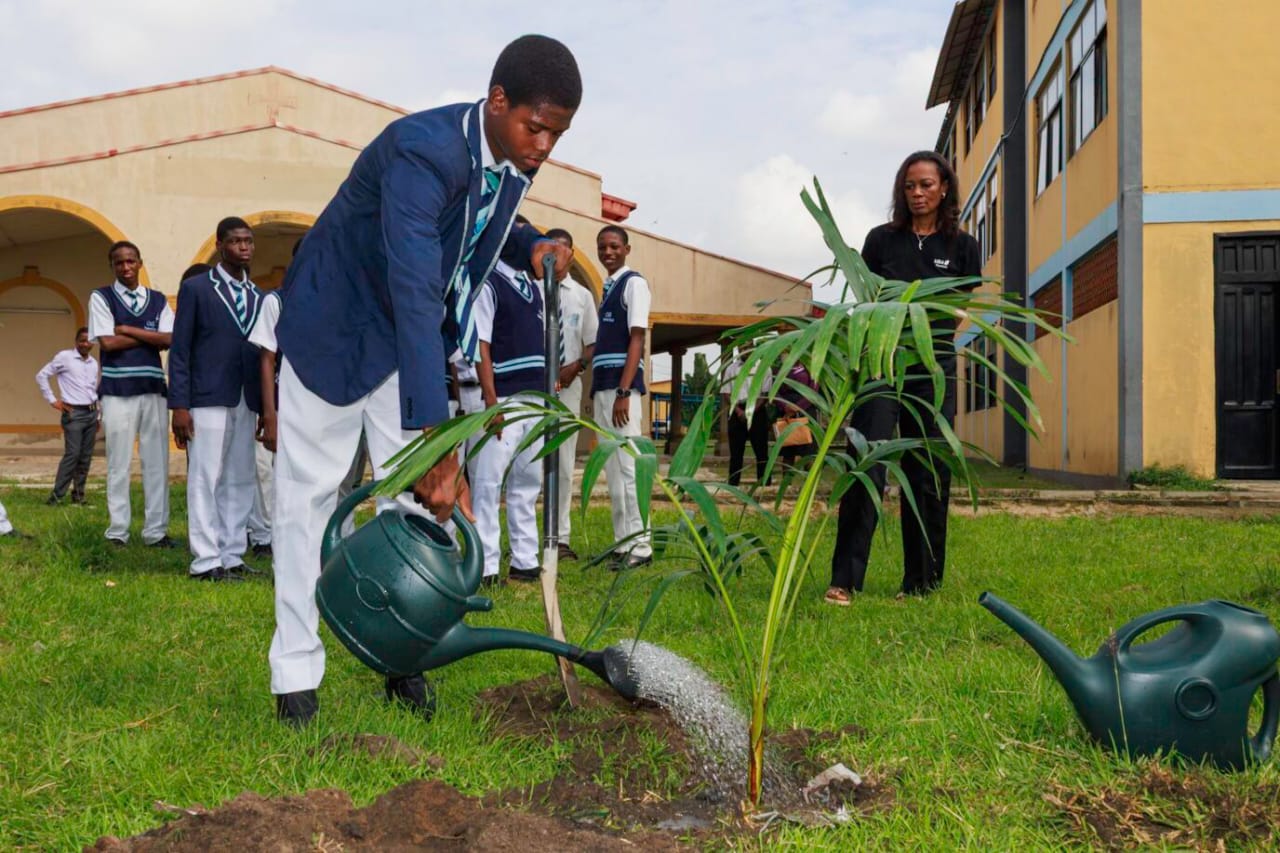
During the sensitisation exercise, Anosike and his team, alongside teachers and students, planted trees at some schools, including Christ Anglican College in High Level, Makurdi, Benue State. He emphasised the importance of integrating climate change education across relevant school subjects.
He further called for investment in appropriate learning materials, teacher training, practical activities and community engagement, stressing that the curriculum should reflect the environmental challenges facing different parts of Nigeria.
Integrating climate education into schools could help young people better understand local climate risks and identify practical ways to respond. The proposed changes would require coordinated efforts to ensure teachers have the resources and training needed to translate climate knowledge into action.




Leave A Comment